When East Meets West Inside the Human Body
Good evening, everyone:
I hesitate to tread where the New York Times has already traveled, but . . . . an extraordinary piece appeared in yesterday ’s edition describing a recent “discovery ” about the human body that turns out to have been understood in Eastern medicine some 4,000 years ago, but hasn ’t quite made it into the canons of Western medicine.
I have absolutely no expertise in human physiology, but can ’t help but be awed by all of this. So let me provide the dummy ’s interpretation of a really complex set of ideas laid out by the Times ’ Avraham Cooper in his piece “The Human Body ’s Hidden Pathways. ”
A number of years ago, two researchers named Theise and Wells discovered that the ink in tattoos penetrated deeper beneath the skin than had been anticipated, moving into a layer of tissue beneath the skin called the fascia – the connective tissue that wraps and supports every element of the body ’s internal structures (bone, muscle, organs, blood vessels).
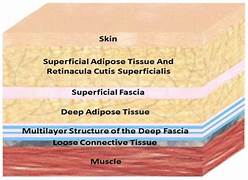
The fascia are certainly well-known, but the route the ink took into the fascia was not. Indeed, it was supposed that there was no connection between the skin and fascia; turns out there is. And it also turns out that that same connective layer exists among organs.
The Times notes that this is a revolution in anatomical thinking: the body has “interstitial spaces [that are part] of a vast interconnected whole – what scientists now call the interstitium. ”
In other words, there is a third system that moves fluids (cells, nutrients, hormones, and other matter) through the body: the interstitium joins the cardiovascular (the heart pumping blood through arteries, capillaries, and veins) and lymphatic (which removes excess fluid from tissue) systems.
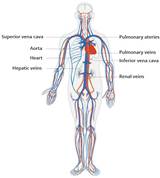
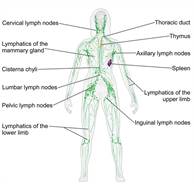
Theise and Wells urge us to think of the newly-conceptualized interstitium as a gel-like substance that fills in space between interwoven bundles of collagen (the body ’s most prevalent form of protein that provides strength). Back to the tattoos: this is the gel through which the ink flows from the skin to the fascia before entering the cardiovascular and lymphatic systems.
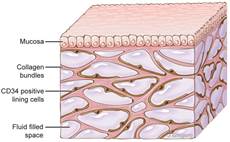
Cooper likens this phenomenon to groundwater moving below the earth ’s surface before surfacing in springs and rivers.
So far, pretty interesting. But Cooper takes us beyond that to the fascinating: pointing out the close alignment of the workings of the interstitium and the workings of the meridians in traditional Chinese acupuncture.
The latter system has long proposed that chi – the life force that flows through a human body – moves along one of twelve main channels, or meridians. Placing needles on those meridians enhances that flow.
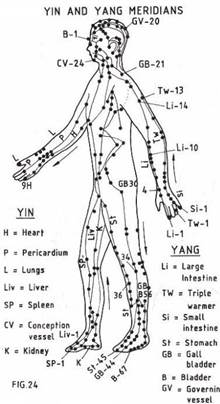
Cooper notes, citing recent experiments: “These acupuncture points have since been found to lie within the same areas of connective tissue where fluid flows through the interstitium. ”
Even though considerable additional research needs to be done to understand the implications of interstitium serving the functions it does, it is already clear that this new understanding may unlock all sorts of potential medical applications (including cancer and diabetes treatments).
West may not meet East when our President travels to China this week. But it appears that may be happening in physiology.
Rip