What St. Louis Taught Me About Detroit
Good evening, everyone:
Last week, Chantel and I had the privilege of spending two days with an extraordinary cross-section of St. Louis civic, business, neighborhood, and philanthropic leaders. Invited by our grantee, Accelerator for America, and the St. Louis Community Foundation, we explored which lessons from Detroit ’s journey over the past two decades —and from other American cities where we work —might be relevant to St. Louis.

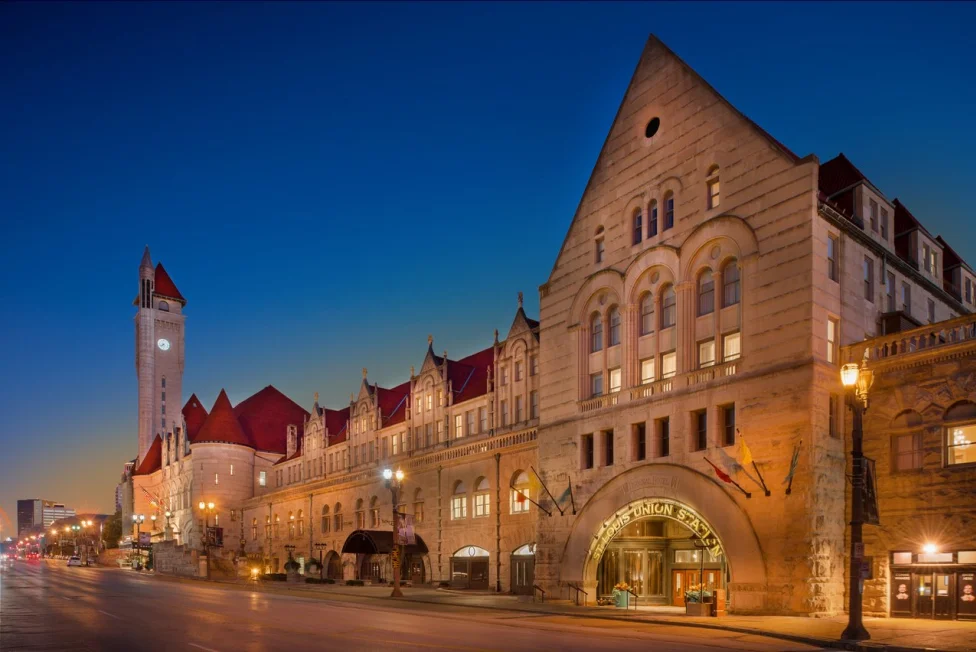
Although St. Louis spans just 62 square miles —compared with Detroit ’s 138 and Memphis ’ 317 —it faces many challenges that echo early- to mid-2010s Detroit and present-day Memphis, including population loss, high downtown vacancy rates, and widespread and decades-long disinvestment in the traditional Black neighborhoods of North St. Louis.
Like Detroit, St. Louis possesses remarkable assets: world-class institutions, committed civic leaders, strong philanthropic organizations, and deeply engaged residents. The challenge is not a lack of assets; it is aligning those assets behind a shared agenda and sustaining the discipline required to implement it over the long term.


The level of honesty and clear-headedness was deeply encouraging. Throughout the course of the two days – a welcome dinner, a larger-scale fireside chat and panel discussion, and several roundtables with sector-specific leaders – St. Louisans spoke candidly about their challenges. At the same time, there was a palpable sense that the city may be at an inflection point. Several participants noted that this is the first time in recent memory that major civic, philanthropic, and business actors seem prepared to tackle underlying structural challenges together rather than pursue isolated solutions.

Stephen Westbrooks, St. Louis Development Corporation's director, right, sits down with Mayor Cara Spencer, second from right, and Kresge Foundation CEO Rip Rapson, second from left, for a conversation at the Northside Movement Center on Tuesday in north St. Louis
Source: Charlotte Keene / St. Louis Public Radio
A recurring theme throughout our conversations was the importance of collaboration. Detroit ’s progress was never the result of any single project, institution, or sector. It depended on government, philanthropy, business, and community organizations finding ways, often imperfectly, to move in the same direction. St. Louis leaders repeatedly returned to this idea, acknowledging both the promise of greater alignment and the frustration of fragmented efforts, competing plans, and uneven implementation.
Those interested in philanthropic practice would have found our time with the McDonnell Family Foundation especially thought-provoking. With an endowment of roughly $1 billion and annual spending of about $30 million, the foundation has recently shifted from a more traditional focus on research and international grantmaking toward a deeply place-based strategy centered on St. Louis. Among other efforts, it has committed 10 years of funding to launch the Inclusive Prosperity Partnership, which brings together community members, philanthropic partners, sector leaders, and data and practice leads through advisory structures and problem-solving teams. This “problem-smashing ” approach convenes, aligns, and holds together actors around issues such as workforce development and job placement. It offered an impressive example of philanthropy hoping to move beyond program funding to play a role in building the shared problem-solving muscle needed to address complex challenges.
The visit reinforced something we have learned repeatedly: revitalization is not about individual projects. The larger goal is creating a quality of life that gives residents confidence in their city and a sense that they have a stake in its future.
St. Louis has work ahead, but it also has extraordinary potential. As an outsider, I was struck by the depth of talent, institutional strength, and civic commitment that were present for our conversations. If Detroit ’s experience offers any lesson, it is that meaningful change is possible when communities commit to the long game, embrace shared responsibility, and align around a vision larger than any one organization or sector. I left St. Louis with a sense that a critical mass of leaders there understands exactly that and are eager to begin the work.

Rip