The Quiet Magic of Pop-Up Books: When Design Lifts Off the Page
Good Friday afternoon, everyone:
Jennifer K. sent me this wonderful note at year ’s end:
Hi Rip,
Ron Charles, the lead fiction book critic for the Washington Post , writes a charming weekly newsletter. In [his end-of-the-year] installment, he says, "the work of literature that delighted me most this year is a pop-up book. " It reminded me of your commitment to telling Krege's story last year in a pop-up book that stretched the imagination and made space for delight towards our focus cities. . . . I hope you enjoy it.
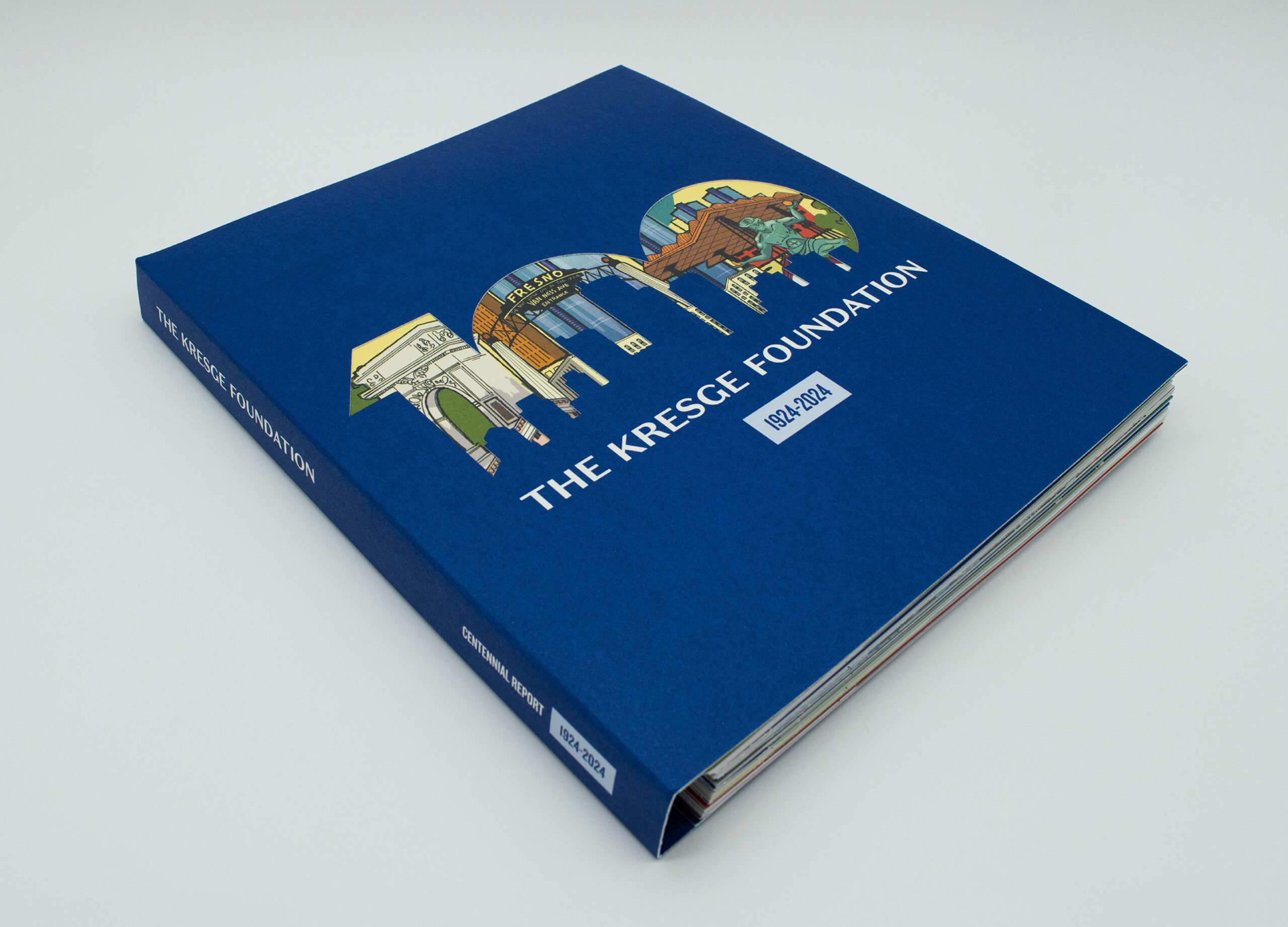
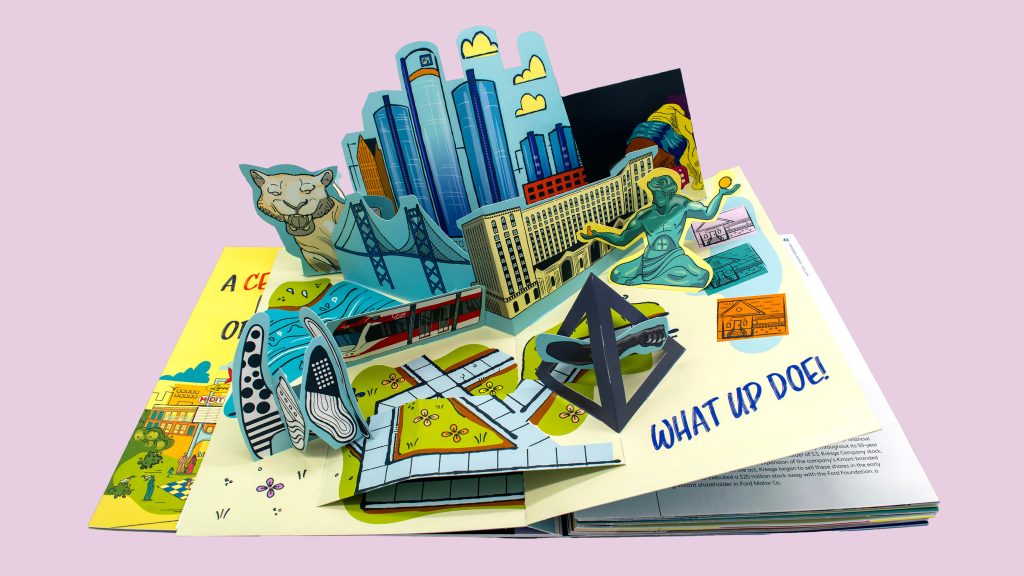
In truth, the success of our annual report pop-up is attributable to our communications team, which spec ’d it, found the perfect artists to create it, oversaw the book ’s considerable construction complexities, and ensured through both stories and visuals the elevation of distinctive elements of our four focus cities. Deepest thanks to them.

But I think Jennifer – and Charles – makes a compelling point: there is a simple magnetic magic to drawing people into a book this way. And into the esoteric, but fascinating, world of typography. Here is how Charles describes the book he so admired:
No disrespect to all the fine novels I read this year, but the work of literature that delighted me most is a pop-up book.
Hear me out. Kelli Anderson ’s “Alphabet in Motion ” is a pop-up book the way Beethoven ’s Ninth Symphony is a ditty. This astonishing machine in paper explores “how letters get their shape ” by making letters literally rise into the air before us.
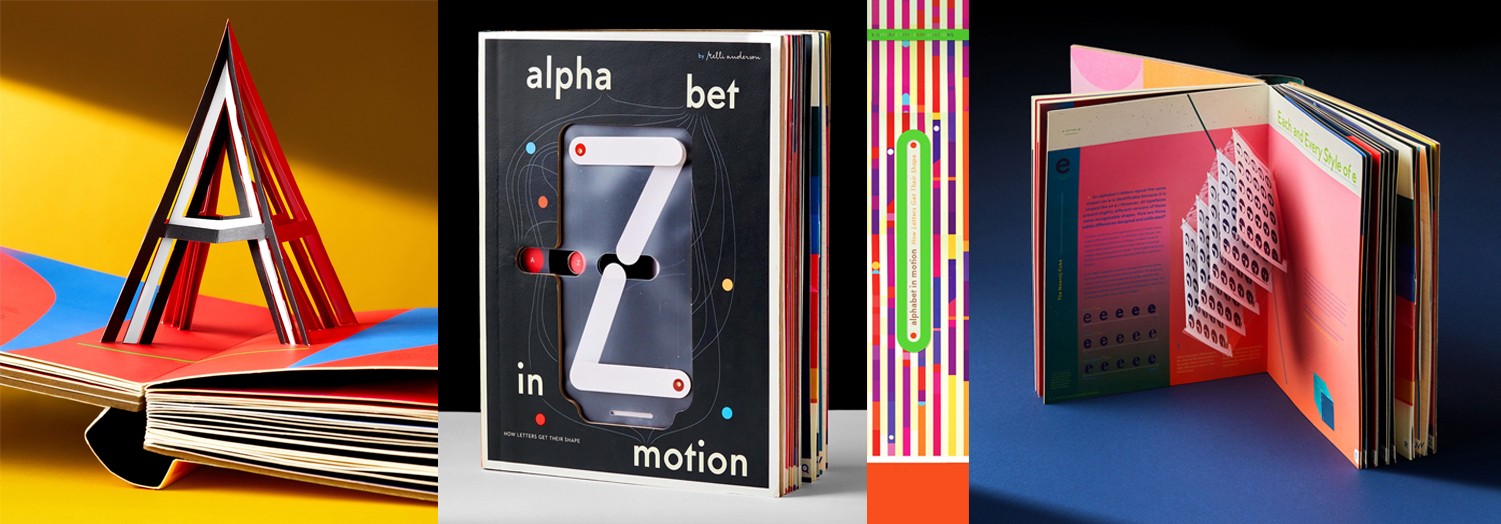
Open “Alphabet in Motion, ” and the red letter “A ” thrusts up between two pages like the Eiffel Tower.
Move on, and 250 subtly different examples of the letter “e ”— all historically real variants — spring into a shape-shifting cube .

Place your iPhone into the paper projector, turn on its light and watch how the letter J comes alive on the wall.
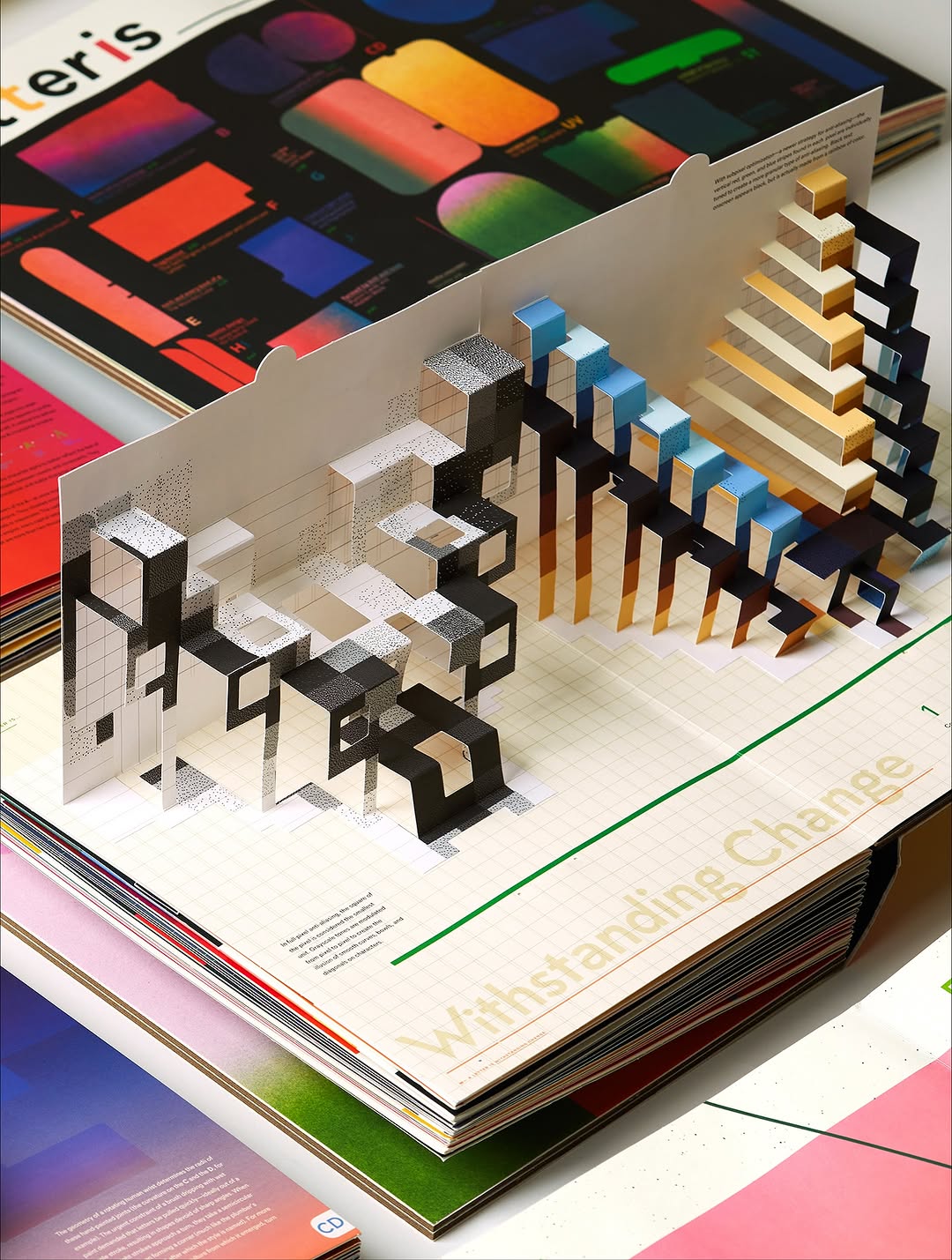
Another two-page spread demonstrates how designers interpolate letters — blending shapes between two different type styles. Pull a tab and watch how tiny squares create the W ’s sense of continuous curves.
Design – whether in books, or buildings, or everyday objects – helps define how we enter, move through, and understand a physical space or how we stimulate our imaginations to entertain new ways of confronting problems. It is inspiring to think that a children ’s book like Ms. Anderson ’s (or a book for grantees, for that matter) can carry those qualities as well.
It ’s a stretch to tie those themes into Monday ’s observance of the 40 th anniversary of Dr. Martin Luther King, Jr. Day. But let me try anyway.
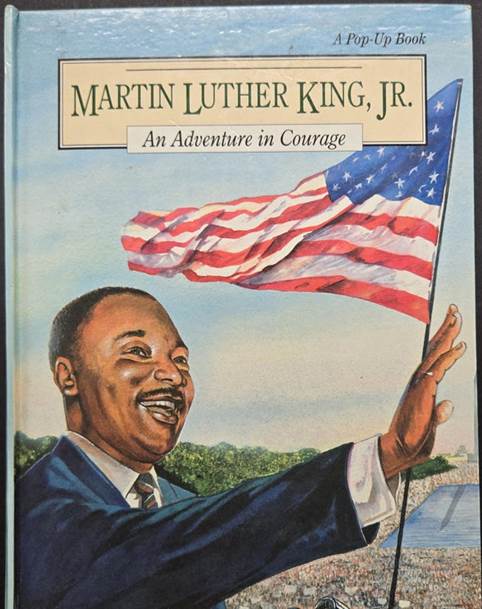
I was delighted to discover a 34-year-old children ’s pop-up book that creates three-dimensional depictions of milestones of Dr. King ’s life. Called Martin Luther King, Jr.: An Adventure in Courage , it was written by Victoria Crenson and illustrated by Bob Lynch:
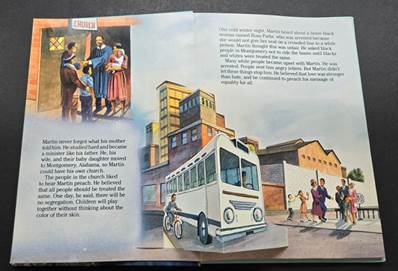

Simple, but powerful. A fitting way for young people to learn about Dr. King ’s journey.
Rip