The Brilliance of Eero Saarinen
Good evening, everyone:
As explorations of architectural creativity that may or may not carry lessons for our headquarters/campus reimagination/neighborhood revitalization efforts, we’ve scrolled through Frank Gehry’s unpredictability, Zia Hadid’s elegance, and Antonio Guadi’s embrace of nature. I wanted to toss one more into the mix: Eero Saarinen, who spent his formative creative years five miles from our current headquarters.
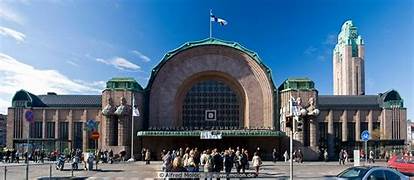
Saarinen trained in architecture under his father, Eliel Saarinen, who helped define 20th century Finnish architecture through projects like the Helsinki Central Station (1919).
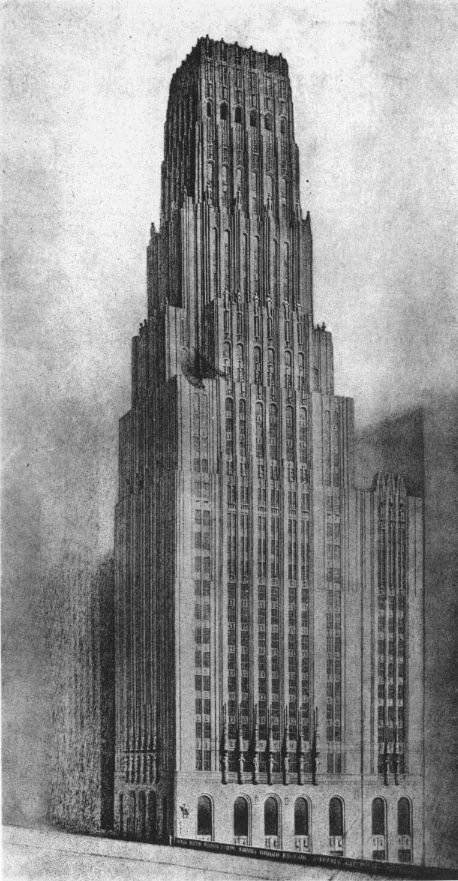
The founder of Cranbrook, George Boothe, was so taken with Saarinen’s runner-up submission for the 1922 Chicago Tribune Tower Commission that he asked him to come to Bloomfield Hills to oversee the Cranbrook Academy of Art.
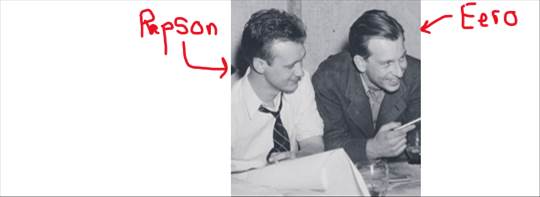
Saarinen sought – much as the German Bauhaus had – to create a holistic integrative approach to design, combing planning, architecture, sculpture, weaving, drawing, painting, and ceramics. It was an approach that would forever change American modernism, producing luminaries in all those fields: the sculptor Henry Bertoia (see my recent note on his sculpture in the lobby of the new GM headquarters); planner Edmund Bacon (responsible for major works in Philadelphia); architects and furniture designers Ray and Charles Eames, Florence Shust Knoll, and my father; fabric artists Lilly Swan Saarinen and Ruth Adler Schnee; ceramicist Maija Grotell.
And architect Eero Saarinen.
The younger Saarinen’s career was relatively brief. After a half-dozen years at Cranbrook, he was enlisted to undertake projects across the country during and after WWII, only to die far too young in 1961, at age 51, from a brain tumor.
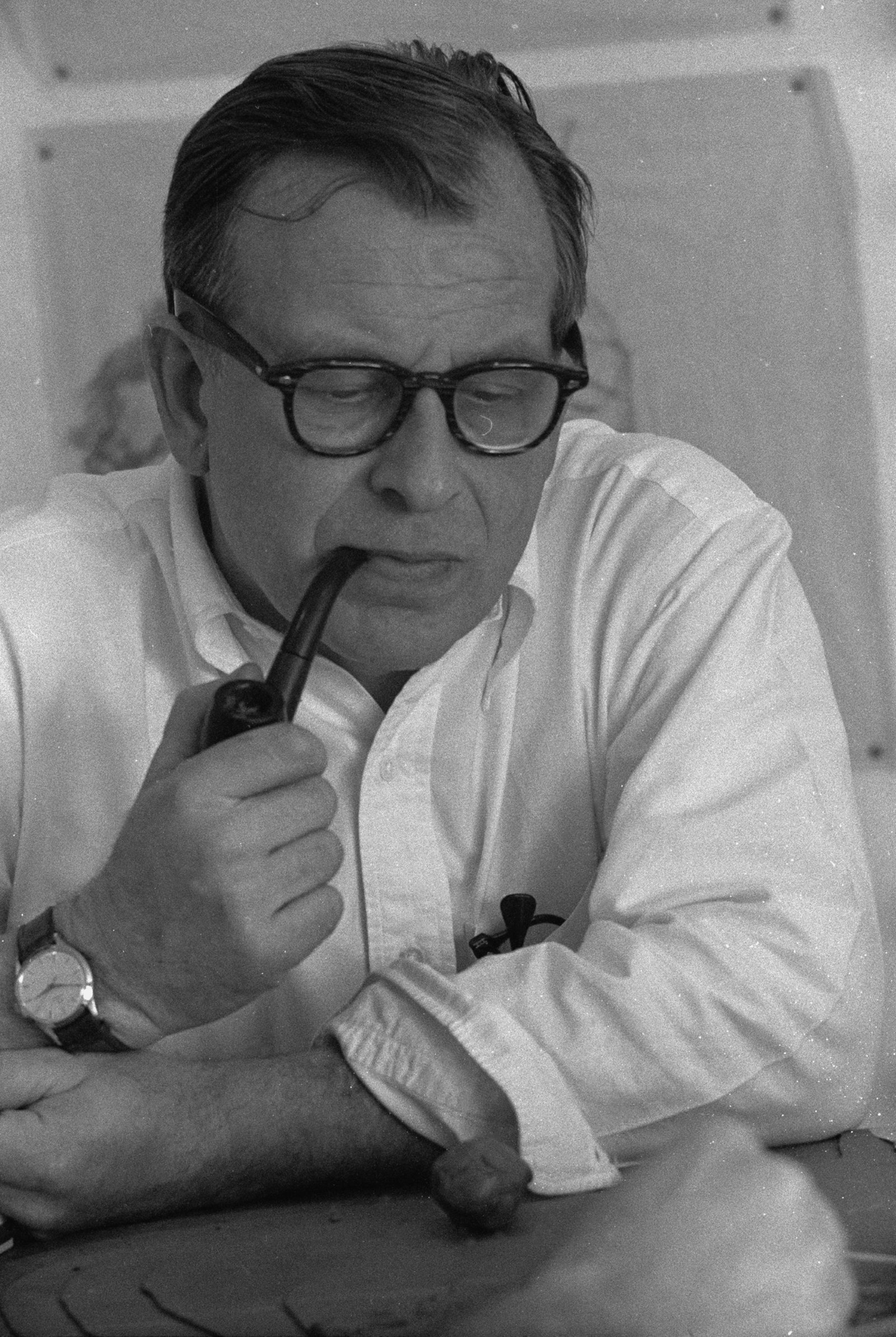
His career was meteoric. In less than a twenty-year span, he designed multiple structures that remain iconic today – and that exerted immeasurable influence over subsequent generations of architects. Indeed, my father – who collaborated with him for a half-dozen years – once said to me that he believed Saarinen would have become the greatest American architect of the twentieth century had his life not been cut short.
Consider just a handful of his projects:
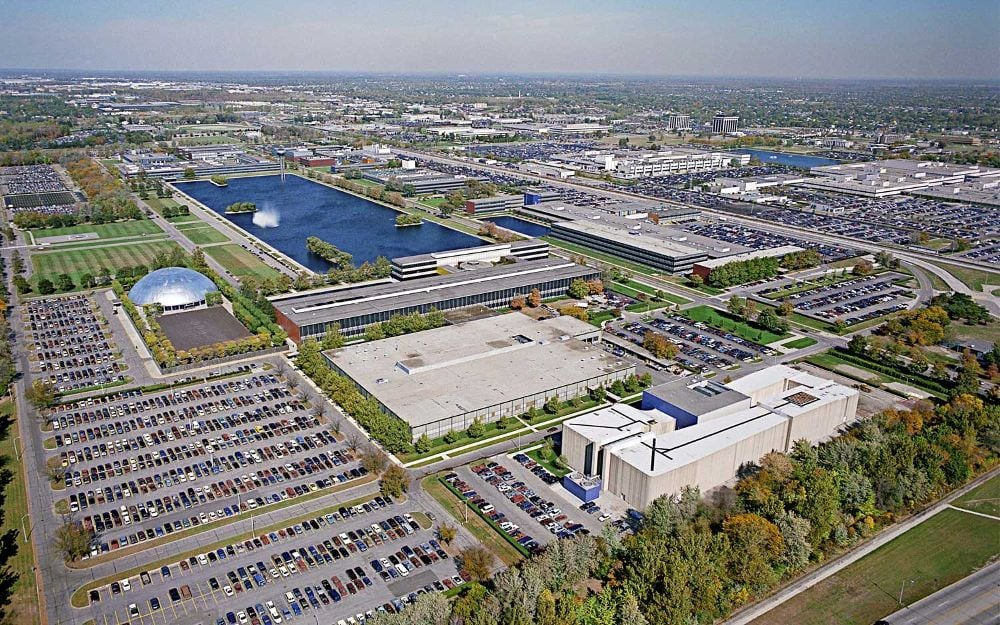
- The General Motors Technical Center in Warren:
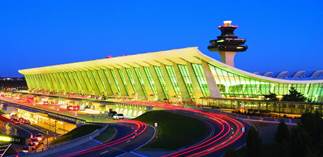
- The main terminal at Dulles Airport:
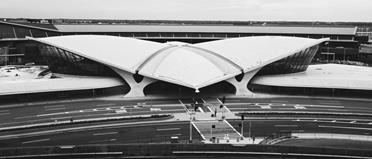
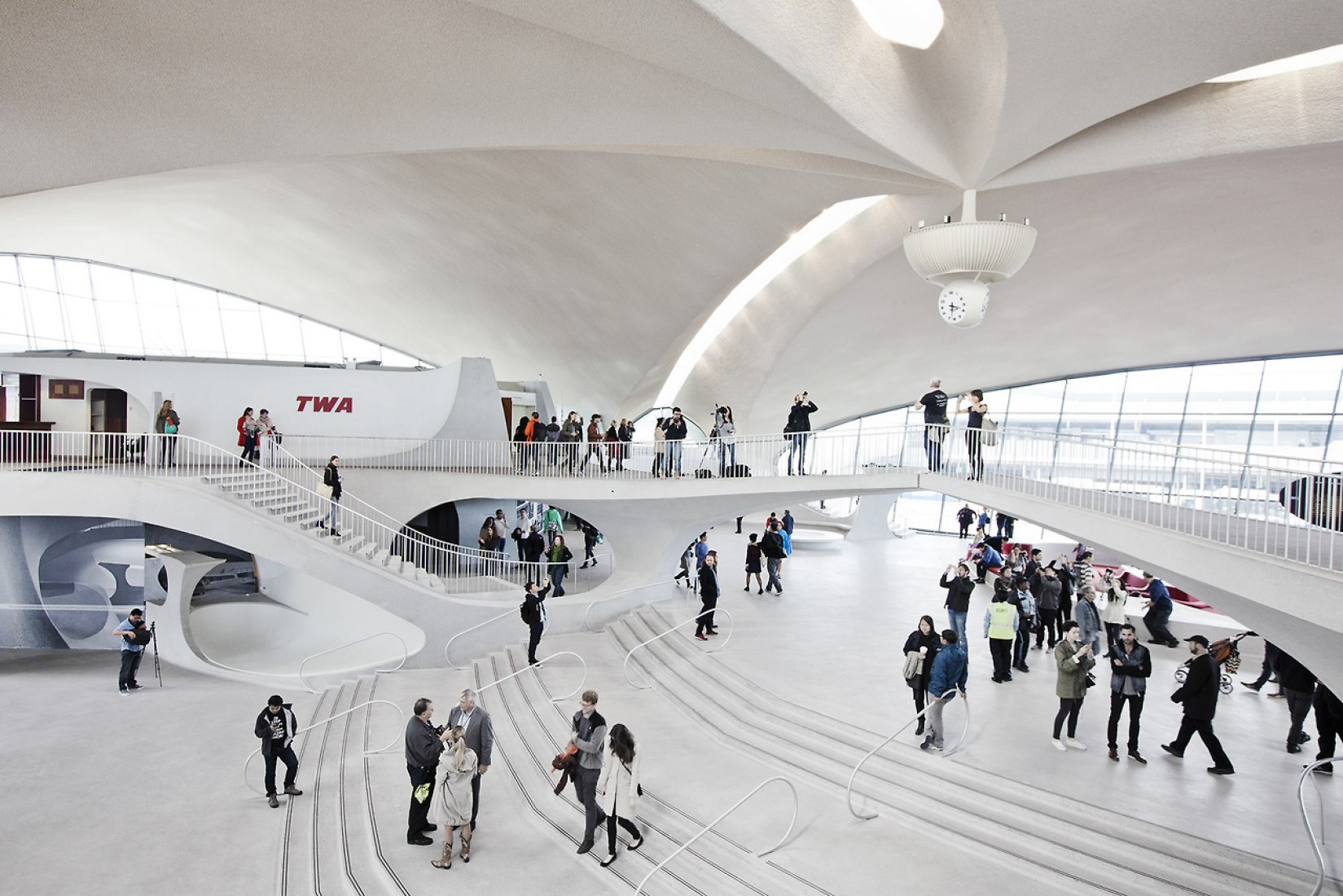
Ø the TWA Flight Center at Kennedy Airport, which has been renovated and transformed into a hotel, with a little help from Kresge:
- The North Christian Church in Columbus, IN:
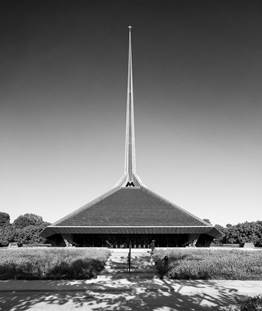
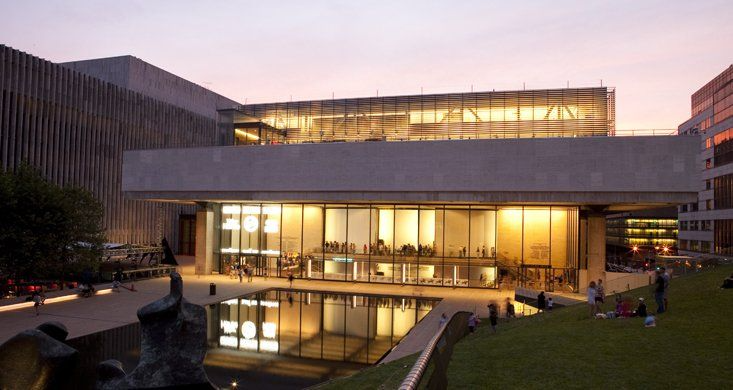
- St. Louis’ Gateway Arch:
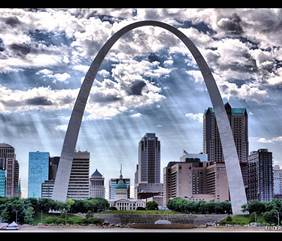
Ø The IBM Thomas Watson Research Center in New York:

- AND! The Kresge Auditorium at MIT:
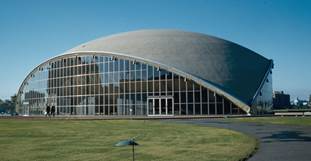
No less than Gehry and Hadid, Saarinen pushed convention well beyond the fence-line of what had gone before:
. . . the sculptural curves of the Arch or Watson Research Center or Kresge Auditorium;
. . . the two airports’ structural innovations in the use of steel, reinforced concrete, and cables;
. . . a human-oriented sensibility that broke away from the more rigid International School vernaculars of Ludwig Mies van der Rohe, Richard Neutra, or Le Corbusier;
. . . the uniqueness of each of his design statements given the challenge being presented (he once noted, “The problem contains the solution."), making it difficult to pin down a description of the Saarinen visual “style” (contrast, for example, the very different design “solutions” to what might appear to be the same “problem” – an airport).
When I mentioned to Liz Diller that I was doing a series of notes on audacious architecture, she smiled and said, “Don’t forget Saarinen.” Indeed.
Rip