Indigenous Peoples' Day: Who Gets to Tell the Story
Good evening, everyone:
In my note last week about the multi-layered Maria Callas mural in Greece, I ended with an observation about the importance of a community fashioning its distinctive narrative – a theme each of our program teams has explored. As I reflected yesterday about Indigenous Peoples Day, the importance and power of narrative – what we call, remember, and describe things . . . who gets to frame and tell those narratives . . . and how, and even when – seemed particularly important.
In our earlier years of observance, I centered my note on Native communities close to home in Michigan. I thought I ’d try a different tack this year and look at two institutions in the nation ’s capital that seeks to hold in integrity a piece of indigenous people ’s narrative, expressed through those peoples ’ hands and voice.
First, the Smithsonian ’s National Museum of the American Indian.
Authorized by Congress in 1989 and opened in 2004, it has had three directors: W. Richard West Jr., Southern Cheyenne; Kevin Gover, Pawnee; and, since 2022, Cynthia Chavez Lamar, the first Native woman to lead a Smithsonian museum.
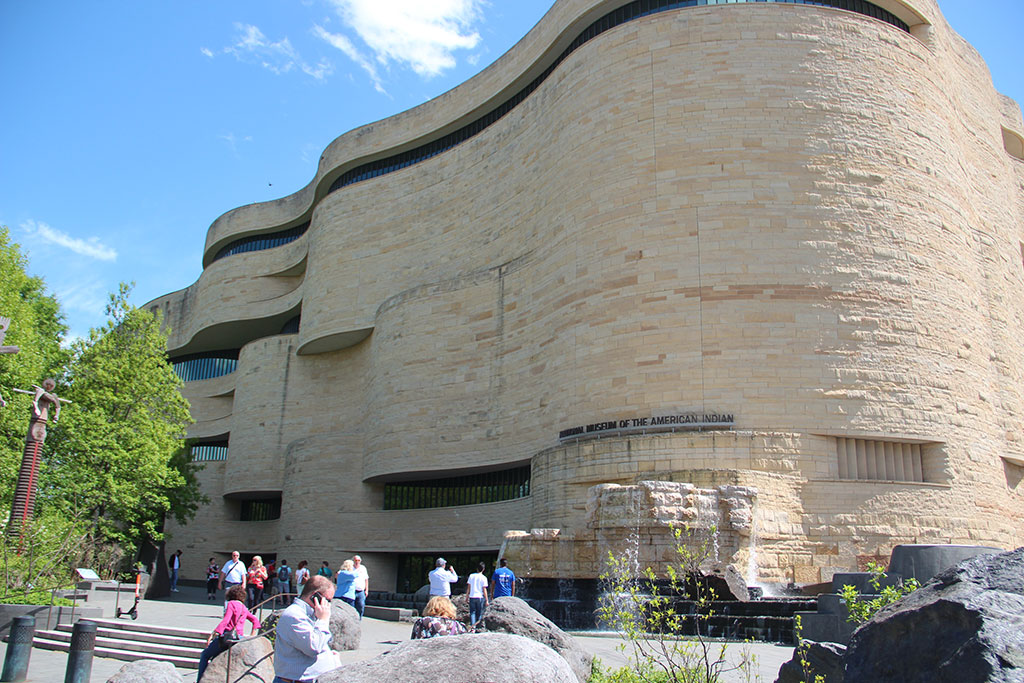
Its collections are not limited to the Mall, but now include a branch in lower Manhattan, and a research center in Suitland, Maryland.


It was a surprise to learn that the Smithsonian ’s collection began with a shirt. In the 1890s, a young engineer named George Gustav Heye bought a deerskin shirt from a Navajo woman who was mending it at a railroad construction site. Collecting Native objects became Heye ’s obsession; he would say that he feared that these invaluable expressions of culture would be lost or destroyed.
For the next fifty years, he gathered some 800,000 objects, spanning 10,000 years and stretching from the Arctic to the tip of South America. It passed to the Smithsonian in 1989 and was moved to the center in Suitland over the next five years – one truckload once a week.
The story may be a reminder that two things can be true at once.
On one hand, many have understandably criticized Heye for taking objects from Native people. Indeed, some of the Museum ’s collection will leave; the authorizing legislation for the Museum required human remains and funerary objects be repatriated to tribes.
On the other hand, his collection is the largest single collection of Native objects, offering an indispensable foundation of contemporary knowledge about Native cultures and histories; indeed, when the Museum in D.C. opened in 2004, its shown collection comprised 2,000 objects or 1/400 th of the size of his collection.
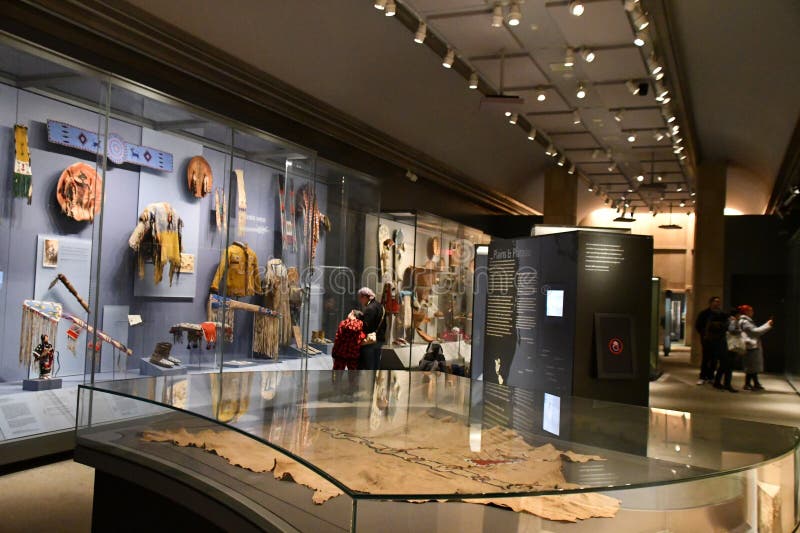
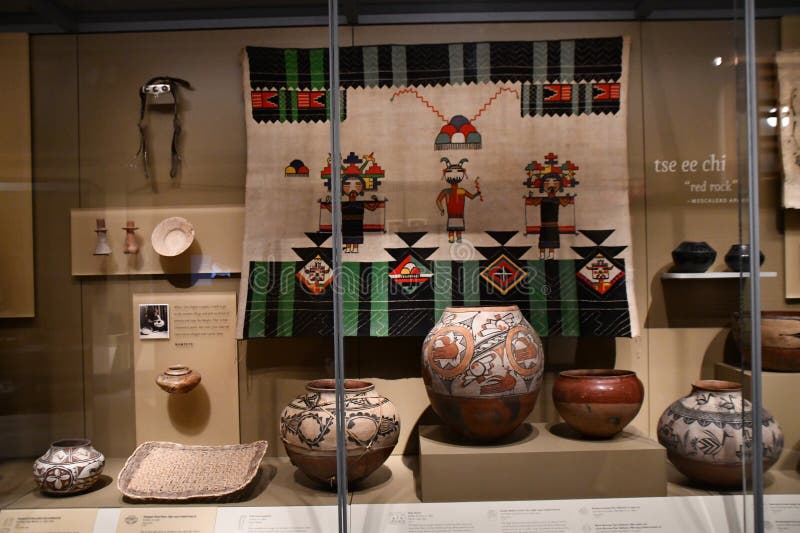
Perhaps as important is how the entirety of the Smithsonian Native collection has been chosen, labeled, and explained. It unfortunately goes without saying that for much of the last century, those choices, labels, and explanations were done by non-Native people. The Museum has sought to directly and unambiguously reverse that course.
I remember seeing media coverage of the Museum ’s opening, with what was said to be the largest gathering of Native communities in history. That was more than window-dressing: the museum ’s three main exhibitions – history, philosophy, and contemporary life – were the product of input from more than twenty tribes. The labeling resulted from curators interviewing community members in their homes, with draft scripts being sent back to the families for review and approval. Tribal representatives were asked to travel to Washington to advise on which objects to show, in what context, and how to handle them.
And at the Suitland research facility, storage follows a similar logic, with the collection organized by tribe rather than by size – a decision about shelving accordingly becomes a decision about whom each object belongs to.
The second institution is the Library of Congress.
For more than 100 years, the Library ’s Subject Heading for Native peoples was “Indians of North America. ” Two years ago, that changed when the Library launched an “Indigenous Headings Project, guided by librarians from Indigenous nations. The project began by eliminating the heading “Indians ” and some 175 headings. It is now developing new headings that combine “Indigenous Peoples ” and a place name.
The roots of the Library ’s Native collections trace back to the early 1900 ’s when Francis La Flesche, of the Omaha “reservation ” joined the national Bureau of American Ethnology. Over the thirty years prior, La Flesche had recorded Omaha songs on wax cylinders, which eventually became a foundational part of the Library ’s Indigenous collections. The Library ’s collection now includes not just books, manuscripts, and articles, but also photos, illustrations, and other visual materials.
Native nations differ widely in how they tell and preserve their stories. But it might be appropriate to turn to the Kiowa writer N. Scott Momaday, who in 1969 became the first Native American to win the Pulitzer Prize for fiction. Momaday observed that the greatest tragedy that can befall us is to go unimagined.
That is at least one way to see the value in both the Museum and Library.
Rip