Governance, Ground, and Art: Why the Obama Presidential Center is Different from Other Presidential Centers
Good afternoon, everyone:
I was asked earlier this week by an Associated Press reporter to reflect on how the Obama Presidential Center differs from the centers of past presidents in terms of structure and governance, philosophical intent, location, and programmatic operations. In light of our engagement with the Center and its work, I thought I might offer a few reflections.
First, governance .
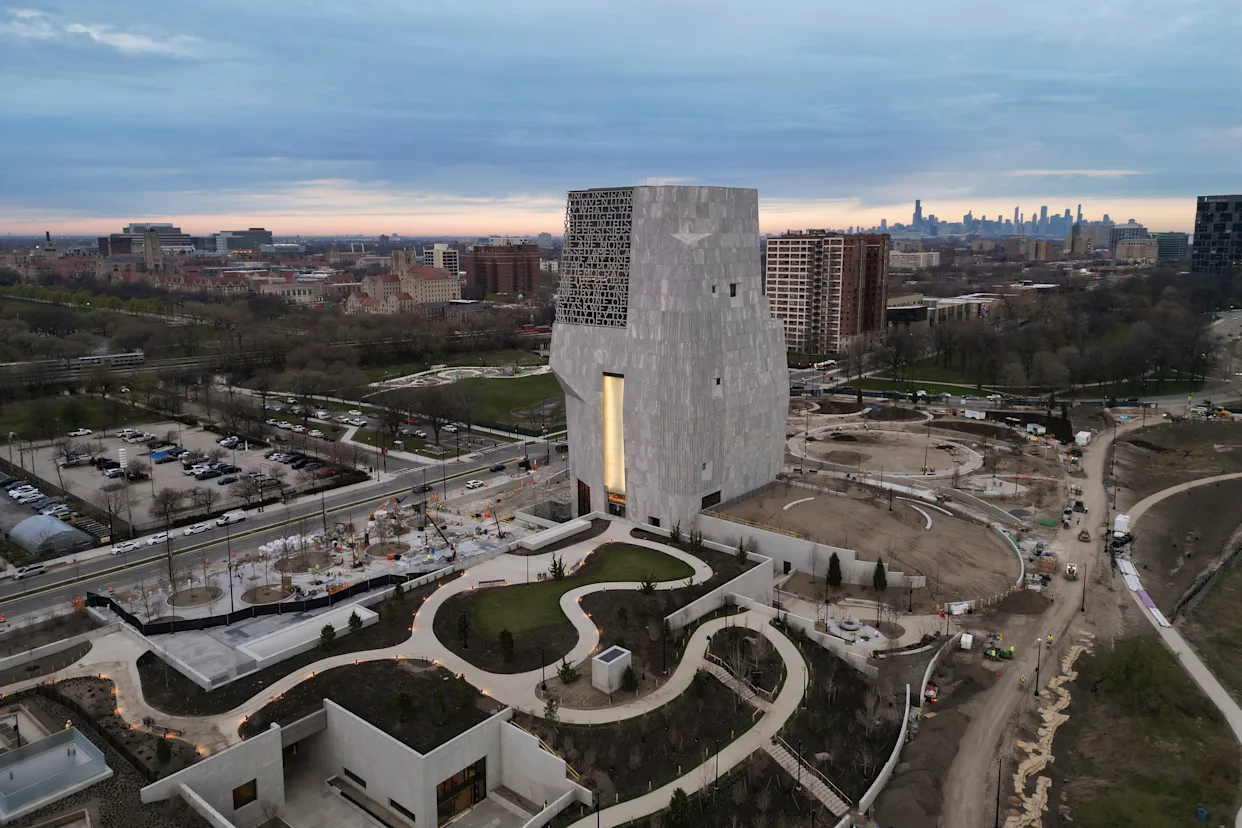
Whereas other modern presidential libraries are governed within, and run by, the National Archives and Records Administration – in which archival materials are held, and managed, within the presidential library – the Obama Center, which is privately funded and operated, sits outside that system. As such, the Center manages the 19-acre site on which it is located (it has a $10, 99-year lease from the City of Chicago), curates the display of materials (the digital versions – the archival materials remain with the National Archives), and designs and carries out the programming (for which the Obama Foundation independently raises money).
Second, a windshield, not a rear-view mirror, look.
The Center, undeniably, reflects and celebrates the President ’s eight years in office – with exhibits of the administration ’s accomplishments, a re-creation of the Oval Office, the inclusion of the President ’s speech commemorating the Selma March on the exterior wall, and much more – but it distinguishes itself from the other presidential libraries (with perhaps the exception of the Carter Presidential Center in Atlanta – more below) in its forward-facing orientation.
The inclusivity of the public grounds, gardens, and playground . . . the centrality of programming for young leaders . . . the incorporation of a branch of the Chicago Public Library . . . the creation of a basketball complex that will include mentoring and community programs. The Foundation has described the Center ’s role in exactly those terms: "a living institution that will inspire, empower, and connect the next generation of leaders. "
Third, the location.
As I ’ll explore in a later note, the Obama Center conveys the aspiration we hope our Marygrove location will convey: a campus that is a civic commons for the community in which it sits.
Think for a moment of the profundity of the contrast with other libraries.
The Obamas wanted to locate their “library ” in the neighborhood in which in which Mrs. Obama grew up and in which the President spent his early career : a neighborhood that is a dense, majority-Black, historically-disinvested – someone else ’s neighborhood. Their metric – cast in such bright relief in both the President and Mrs. Obama ’s opening ceremony speeches – is how well the center will serve that neighborhood.
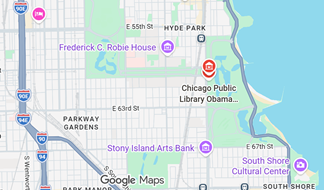
Most of President Obama ’s predecessors chose very differently: attaching their libraries and museums to a larger college campus, or an undeveloped suburban site, or a remote location. Rather than seeking to become part of the neighborhood fabric, they are gestures toward scholarship, biographical commemoration, and historical retrospection:
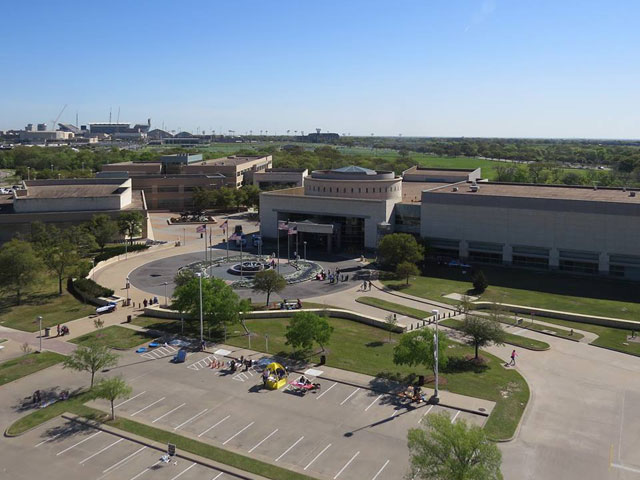
- Both Bushes located their libraries on college campuses, conveying a deep research orientation: Bush I on 90 acres of the Texas A &M campus at College Station, Bush II on the Southern Methodist University campus in Dallas:
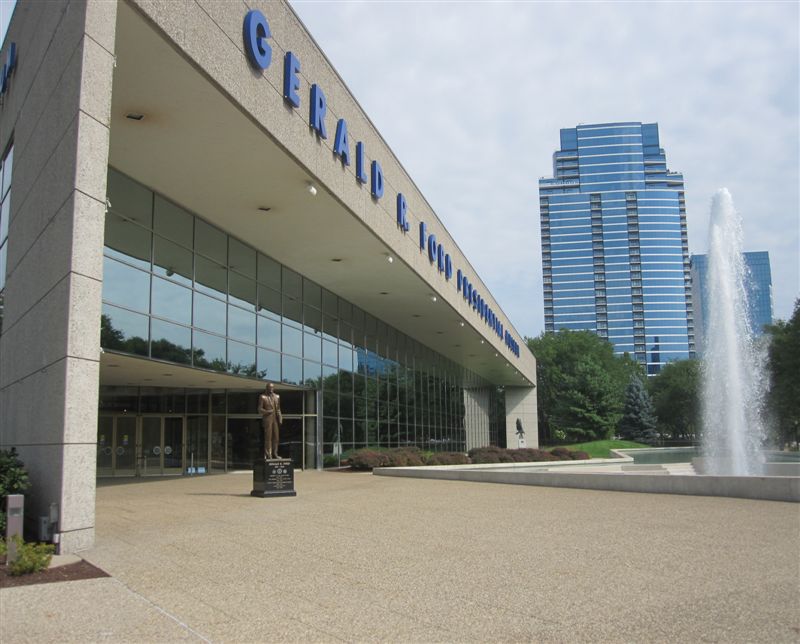
- So too did President Ford, opting for the University of Michigan Ann Arbor ’s campus – although his “museum ” sits more than a hundred miles to the west in Grand Rapids;
- And LBJ ’s as well, locating the Lyndon Baines Johnson Library, a 30-acre site on the edge of the University of Texas at Austin;
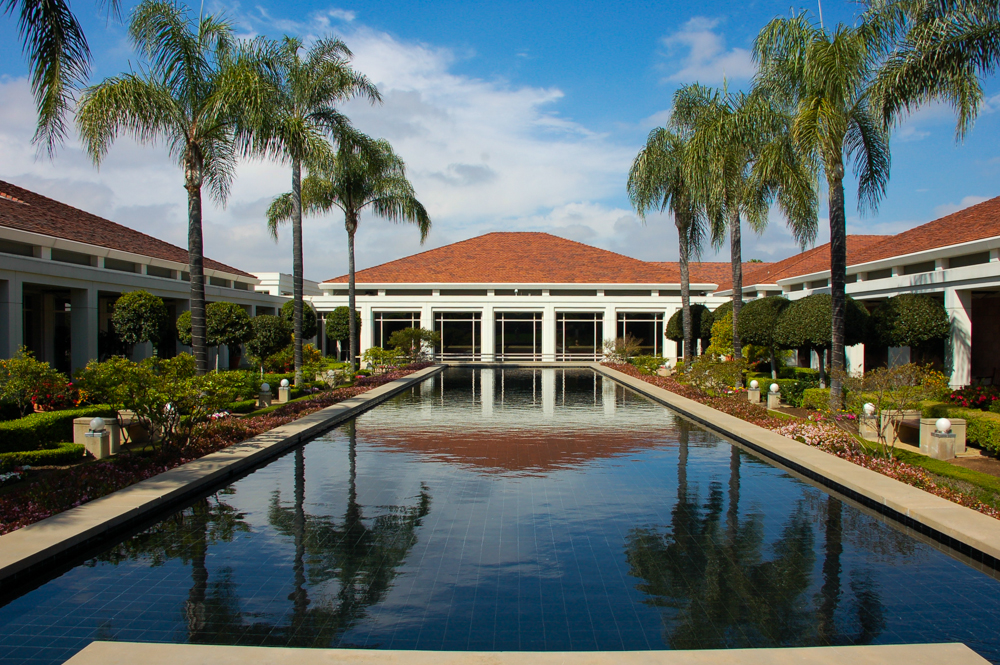
- President Nixon ’s library in Yorba Linda, California was constructed on a nine-acre suburban site in his hometown;
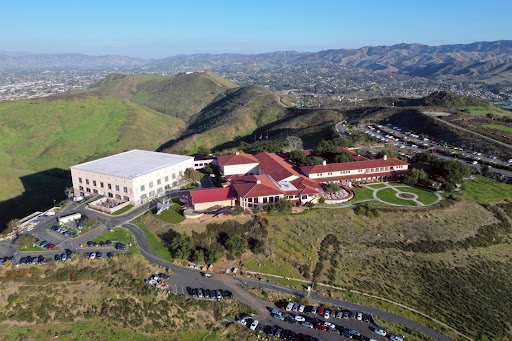
- President Reagan ’s library occupies a 300-acre site in Simi Valley, forty minutes to the northwest of Los Angeles;
- President Kennedy ’s library was constructed on a 10-acre empty waterfront site that is adjacent to, but not part of Dorchester, Massachusetts.
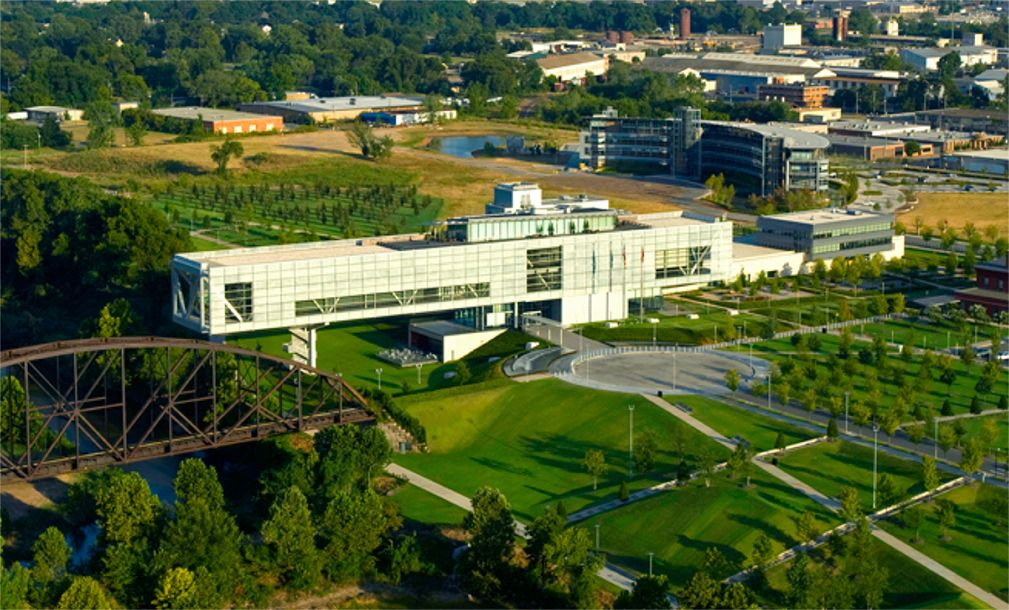
The Clinton Library in Little Rock is an exception to this list. Part of what would become the Clinton Presidential Center and Park on the Arkansas River, the library sought to contribute to the revitalization of the under-developed industrialized riverfront.
But the closest analogue to the Obama Center is the Carter Center in Atlanta – although even here, the contrast is stark.
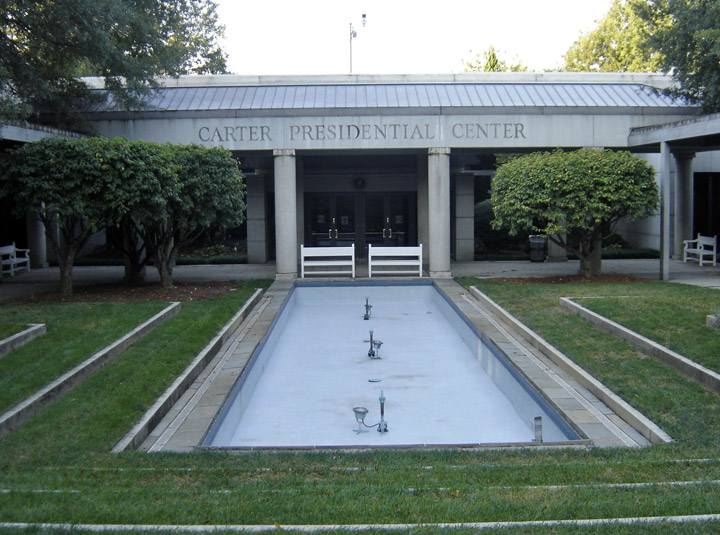
The Carter legacy is carried in two institutions: the Jimmy Carter Presidential Library and Museum is administered by the National Archives and the Carter Center (next-door) by the nonprofit set up by the President and Mrs. Carter in 1982.
The two were built in the Poncey-Highland neighborhood, adjacent to the Old Fourth Ward — Atlanta's most historically significant Black neighborhood and birthplace of Martin Luther King Jr. – on land bulldozed during urban renewal in the tragically predictable pattern of obliterating Black neighborhoods in favor of freeways (here, citizen opposition blocked the construction, but left a scarred site).
The Carter Center points directly to the social activism of the Obama Center in its focus on
peace, democracy, and global health. But, unlike the Obama Center, its engagement with the neighborhood (the Martin Luther King National Historical Park is just west), is incidental.
Fourth, the programming .
The tone of the entire campus is infused with the President ’s signal theme of “Hope. ” That, in turn, is rooted in the call to civic action. Threaded throughout is the dual imperatives of community engagement in fostering place-based change in the host neighborhood and a focus on investing in individuals to become civic leaders able to translate ideals into action. The latter comprises a suite of initiatives:
- The Obama Leaders program selects young leaders from throughout the world who form cohorts seeking change in their regions;
- The Obama Scholars program operates out of Columbia University and the University of Chicago to provide proven leaders with the tools they need to be more effective;
- The Voyager Scholarship program provides college students with scholarships to pursue travel that connects them to new communities;
- The My Brother ’s Keeper Alliance invests in 250 communities across the country that are working to address the challenges facing boys and young men of color;
- The Girls Opportunity Alliance invests in the development of adolescent girls in more than 30 countries;
- The Obama Youth Jobs Corps is a partnership with the Urban Alliance to increase economic opportunities for high school students in underserved Chicago communities;
- The Democracy Forum gathers experts, leaders, and young people to day-long conferences on safeguarding democracy;
- The Teen Action Lab, which connects South Side high school students with leadership development, skill-building, wellbeing and career supports
And fifth, the art.
The Obama Center stands alone in its elevation of art as an integral expression of the Center ’s mission. It is a formative forethought, not an incidental afterthought, to the architecture, the landscape, the relationship to community history. It is built into the building ’s walls - think Julie Mehretu ’s monumental painted glass mosaic . . . It reflects the diversity of disciplines and perspectives the Center seeks to highlight – it contains nearly thirty commissioned pieces . . . It helps define the outdoor spaces – the garden is graced with sculptures from Maya Lyn and others . . . It speaks to the South Side ’s cultural legacy – Mark Bradford ’s wall-sized “City of the Big Shoulders ” fills the Atrium ’s north wall.
There is certainly art in the other presidential libraries. It is, however, a displayed artifact here, a photograph of the president at a seminal moment there, a bust sculpture of the president down the hall. The Obama Center comes at curation entirely differently: the art is comprehensively imagined . . . integrated into the Center ’s themes . . . reflective of the neighborhood ’s economic, cultural, and artistic history . . . aspirational and hopeful.
The Obama Center will face any number of challenges in realizing its highest potential. But it is cast in a very different mold from what went before. Kresge ’s modest support is a recognition of the ideals that are propelling this extraordinary venture forward.
But the clarity of those ideals also explains why a foundation investing in a Detroit civic commons would watch this Chicago experiment so closely.
Rip