Frank Gehry: The Power of Audacity in Architecture
Good evening, everyone:
My note last about the beauty and power of Detroit’s architectural heritage prompted me to revisit the idea of architectural innovation and excellence in the lifeblood of a city.
This is a topic that I believe can help ground us as we move toward greater clarity, specificity, and nuance about the design of our new headquarters – its aesthetics, its functions, its relationship to the campus, and its connection to the broader community.
I can only imagine that that path will give rise to strong views on all sides of multiple questions – about the conversation the building appears to be having with the other buildings on campus . . . about how it engages the campus’ other uses . . . about the message we are sending with a bold modern design . . . about cost . . . and so many others.
I wondered if it might be useful to scroll through a handful of architects who have modeled how creativity, innovation, and even audacity can work hand-in-hand with architectural method and sensibility to create buildings of enduring community importance and value.
I’m not sure quite where this will take us, but I thought I’d start by talking about one of the most original talents in American architectural history – Frank Gehry – who recently passed at age 96.
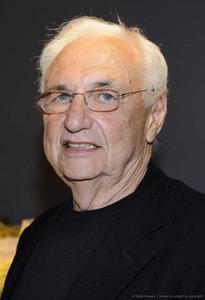
For many, Gehry entered the public consciousness in 1997 with his breathtaking design of the Guggenheim Museum in Bilbao, Spain:
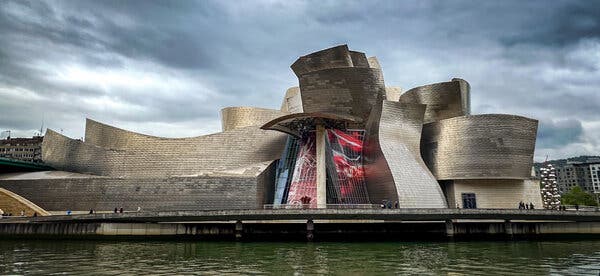
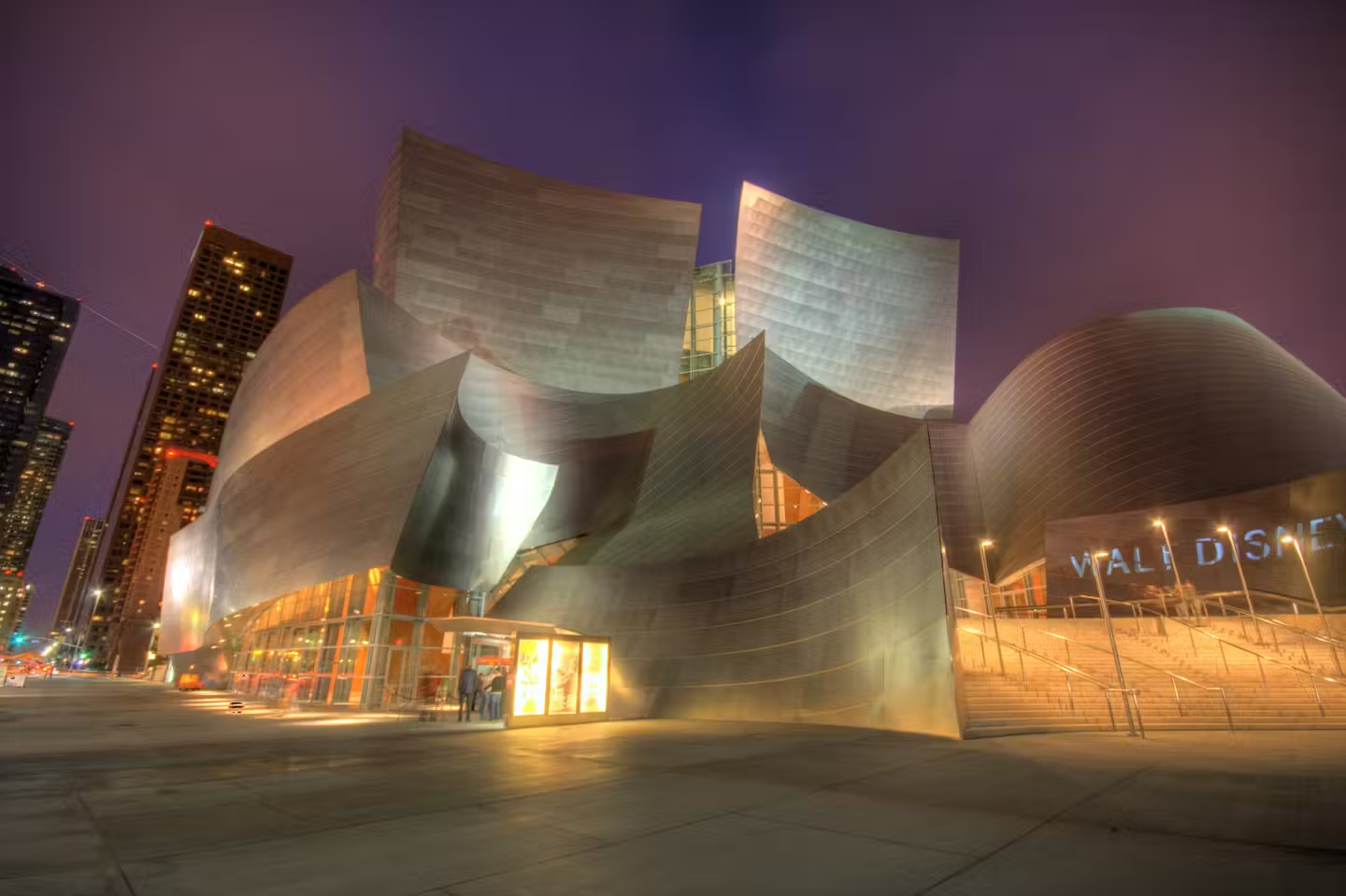
Setting such an unorthodox, flamboyant, exuberant, and dynamic structure in the heart of a struggling industrial city was an act of urban reimagination, not simply architectural daring. His use of titanium in undulating forms became synonymous with Gehry. Here, for example, is Walt Disney Hall in downtown L.A.:
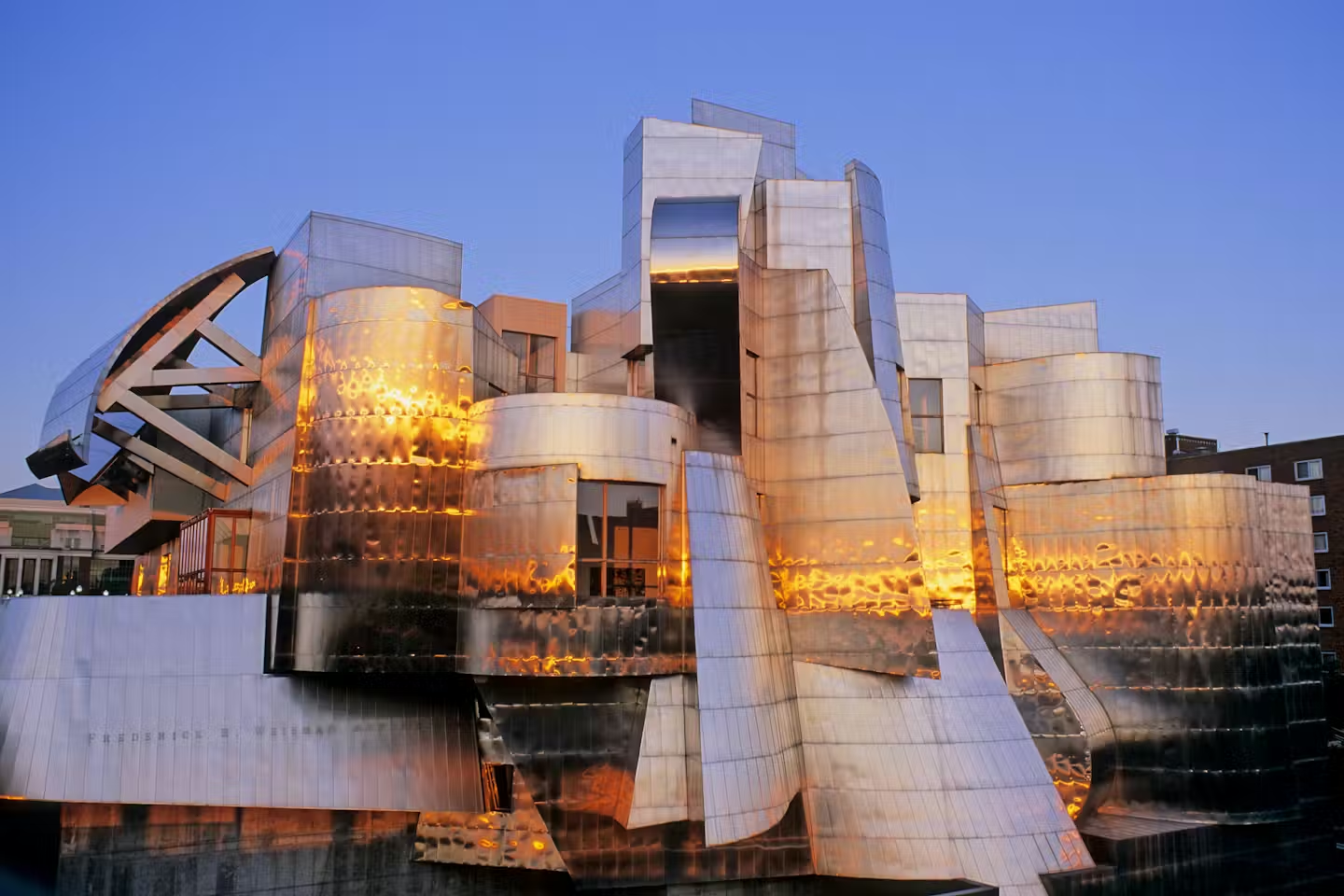
Or the University of Minnesota’s Weisman Art Museum:
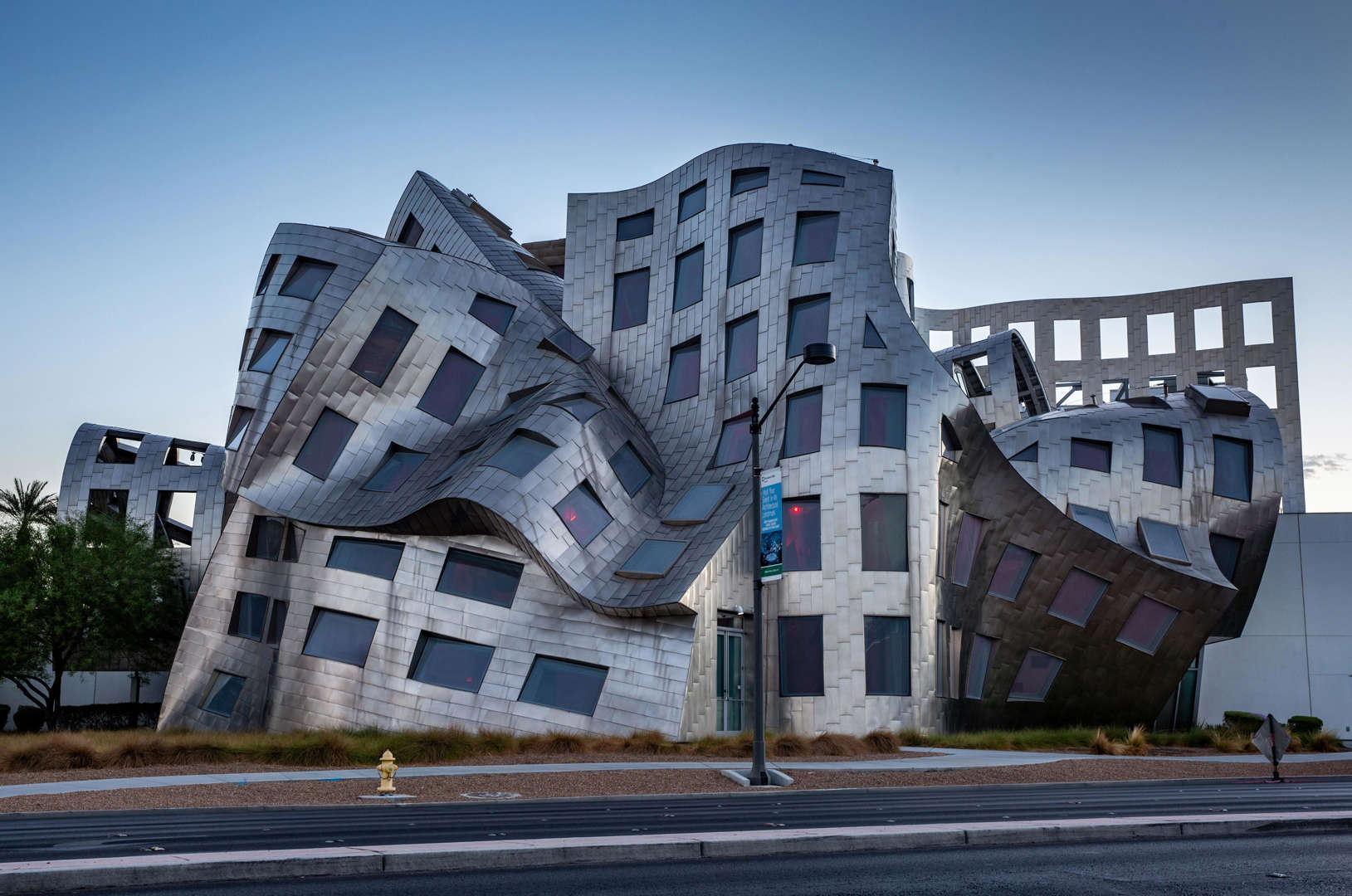
Or the Lou Ruvo Center for Brain Health in Las Vegas.
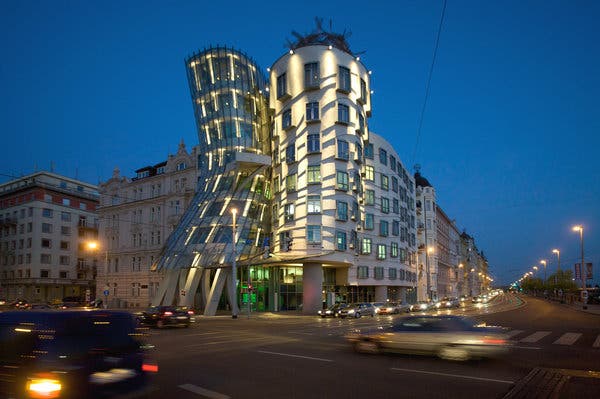
Or the “Dancing House” in Prague, suggesting Fred Astair and Ginger Rogers:
But I first met Gehry in the 1970’s, when Minneapolis’ Walker Art Center created an exhibit around his 1978 design for his beachfront house in Santa Monica. Gehry had purchased and deconstructed an inexpensive, cheaply-constructed wood frame bungalow and wrapped it in a new exterior of – as you can see – plywood, industrial metal, and chain-link fencing.
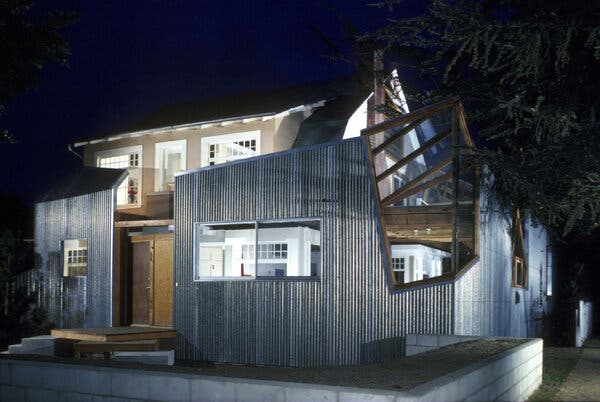
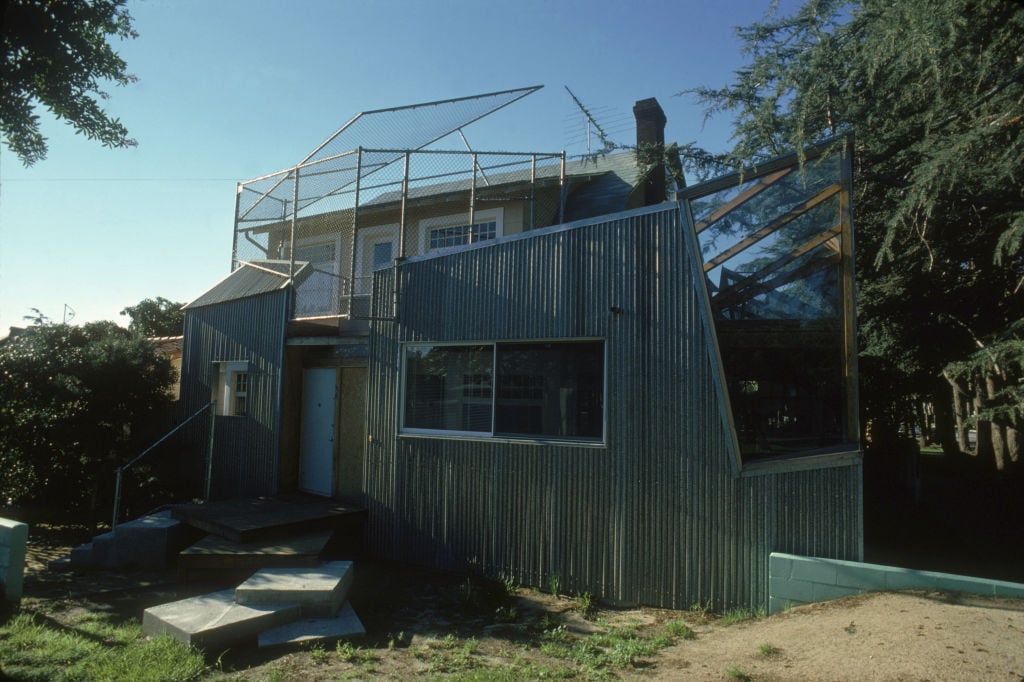
The director of the Walker, Martin Friedman, and the curator, Friedman’s wife Mickie Friedman, were convinced that Gehry was introducing a sculptural approach to architecture that would forever change the profession. They were prescient.
Many years later, as Gehry began to stretch conventional design norms further and further with each project, he gave a lecture at the Minnesota Society of Architects, discussing the emerging potential of computer realization of forms unimaginable under traditional design, material, and construction conventions. I asked him how in the world he could determine what would actually not fall down. He smiled and took me aside. “I make sketches that convey possible expressions of the spirit of what the building is trying to say,” he said. “I do scores of them. We then put them on the walls and invite our engineers to tell me which are buildable and which are not. We then spend forever figuring out just how. Don’t tell anyone, but I’m the captive of the engineering profession.” Increasingly, new computer technologies would liberate his creations even further.
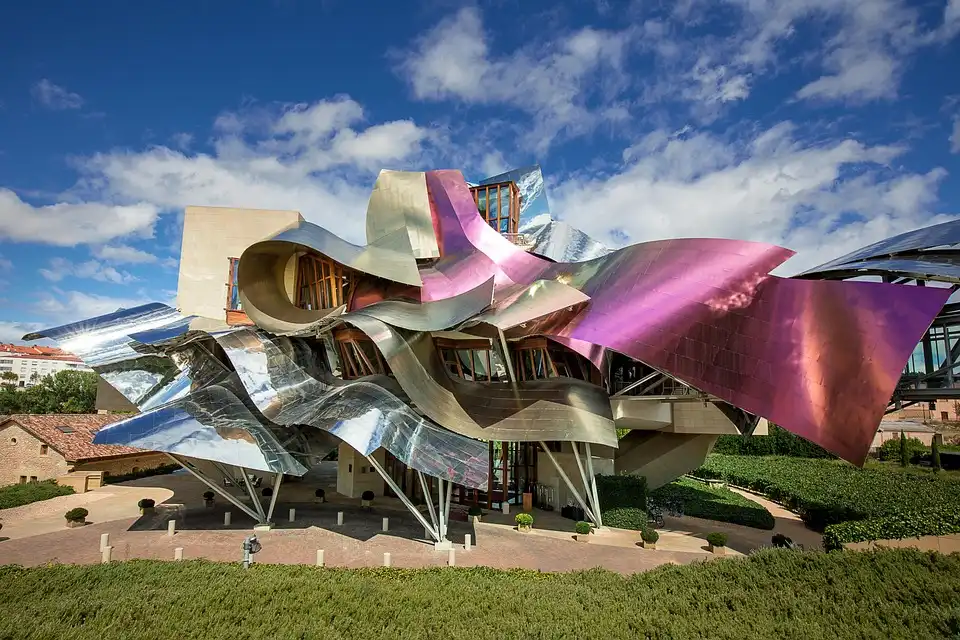
In his obituary for Gehry, the New York Times ’ Nicholas Ouroussoff quoted Gehry as explaining his desire to upend the clean, form-follows-function architectural traditions of designers like Mies van der Rohe: “I was rebelling against everything.” Maybe. But maybe he was also seeking to inject emotion and complexity and personality into an architecture that, in his view, had become too institutional, banal, constrained, and cold.
As pathbreaking as his work was, it wasn’t/isn’t without naysayers. Too sculptural. Too self-referential. Too unwilling to create a mutuality with the buildings around them. Too, too expensive.
But, as Ouroussoff writes: “[His work was] as powerful an evocation of the democratic spirit as Frank Lloyd Wright’s houses had been for an earlier generation. [It spanned] a wide range of projects that, in the judgment of many critics, rank among the most revolutionary creations in American architecture.”
We don’t have a Gehry building in Detroit. But we do have a sensibility that architecture can be courageous, can usher new ways of thinking, can stimulate more democratic patterns of use, can break some rules.
Not a bad standard for our own building project. As Gehry himself said, as if in conversation with Sebastian Kresge, ““You go into architecture to make the world a better place. A better place to live, to work, whatever. You don’t go into it as an ego trip.”
Rip