Florence Knoll: The Design Pathbreaker Too Often Overlooked
Good evening, everyone:
Quite a while ago, in the midst of notes about some of the most interesting architects of recent memory, I promised to do a brief note on one of the formative members of the stellar mid-1930 ’s class of the Cranbrook Academy of Art, but one who is often overlooked: Florence Schust.
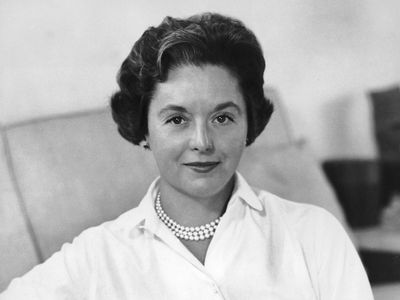
As much as the Cranbrook design sensibility was shaped by my father, the sculptor Harry Bertoia, the architect Eero Saarinen, the planner Ed Bacon, and furniture designers Ray and Charles Eames, Schust (who married Hans Knoll a decade later and would take his last name) would go on to a profoundly influential career as one of the nation ’s earliest female architects, furniture designers, and furniture business owners (she took over Knoll Furniture on her husband ’s passing in 1955 and ran it for many years) in a decidedly male world.
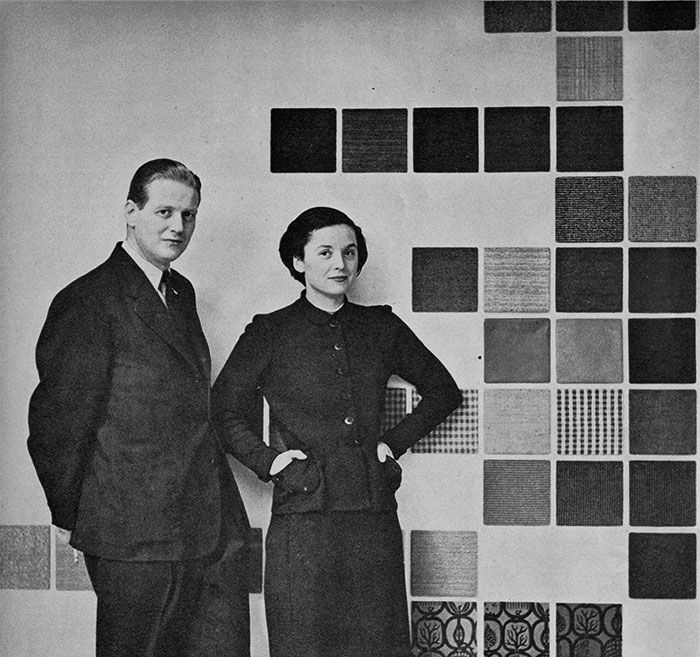
A student of architecture while at Cranbrook (she would later go on to earn a degree in architecture at the Illinois Institute of Technology), Schust/Knoll was impressed with my father ’s furniture ideas and later encouraged her husband (who had founded Knoll Furniture in New York in 1938) to add Dad to the groundbreaking stable of designers in the modern mold that Knoll was assembling – perhaps most particularly, Jens Risom.
Just a quick sidebar:
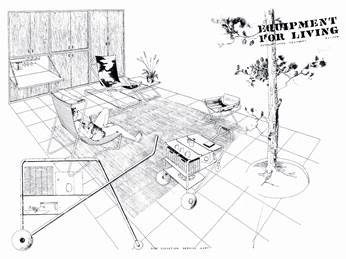
When Knoll rolled out his first line of furniture in 1941, he was on a mission to convince postwar America that modern furniture could be within reach – aesthetically and financially – of middle-class American families. He thought there would be no better way to demonstrate that than to unveil a line he termed “Equipment for Living. ” He called on Eero Saarinen and Dad to – in essence – form a research and development team by submitting design concepts. Knoll was taken with Dad ’s submissions, and immediately offered him his own line, to be called the “Rapson Metal Line, ” which was suitable for indoor or outdoor use. The line rolled out about 1942.
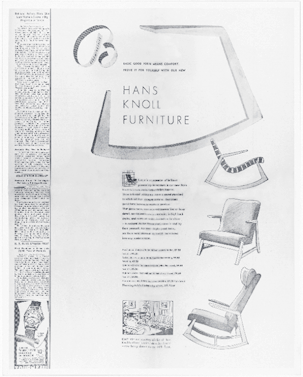
The relationship with Hans and Florence grew through the late 1940s, but may have hit its high point in 1944 when Knoll asked Dad to create something called the “Rapson Line, ” which consisted of twelve chairs. These designs were intended to explore new forms, be affordable, and utilize new materials and fabrication techniques. Knoll hired the legendary graphic designer Alvin Lustig to create a number of visually edgy ads to promote the Rapson Line in national magazines; the ads were such bold graphic design statements that they themselves undoubtedly contributed to the heightened reputation of the Knoll enterprise.
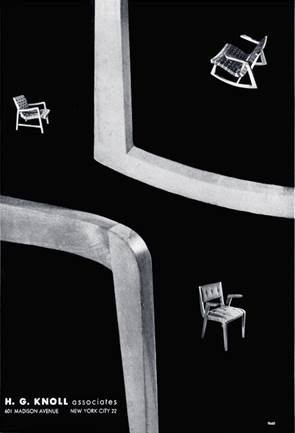
The star of the Rapson Line was the Rapson Rapid Rocker, which many of you have seen in my office. Although designed in continuous bentwood form during Dad ’s time at Cranbrook, the wartime version used pieces of wood no longer than 18 inches – a requirement imposed by rationing restrictions. The entire Rapson Line was purchased by Bloomingdale ’s and featured in a show intended to be the first display of a modern furniture collection within a department store.
In her review of the “The Rapson Line, ” the legendary architecture critic Ada Louise Huxtable led with the headline: “Rapson Rocker steals the show. ” The Rocker sold well. Not that that enabled him to retire early – his royalty for each chair was twenty-seven cents.
Sorry for the detour: back to Florence Knoll.
After serving in apprenticeships for Marcel Breuer, Mies van der Rohe, and Walter Gropius, she met, married, and partnered with Hans. Together, they revolutionized the design of the modern workplace: moving from antique and period styles characterized by heavy, carved wood furniture to an aesthetic that we now know as “Mid-Century Modern ”– sleek furniture, elegant finishes, rich use of textiles (see, for example, our Eminent Artist Ruth Adler Schnee ’s work), uncluttered spaces.
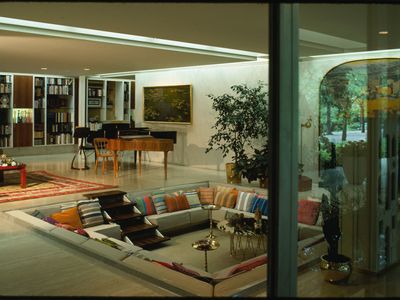
Indeed, it was Florence who founded the “Knoll Planning Unit, ” which not only designed and manufactured furniture, but also created designed spaces, radically transforming interior design into professional endeavor.
And she became a world-class business leader, brokering important licensing agreements with many of the preeminent designers of the 20 th century: for example, Saarinen ’s tulip and womb chairs, Breuer ’s Wassily and Cesca chairs, Mies van der Rohe ’s Barcelona chairs and table, Bertoia ’s wire chairs, and my father ’s multiple lines.
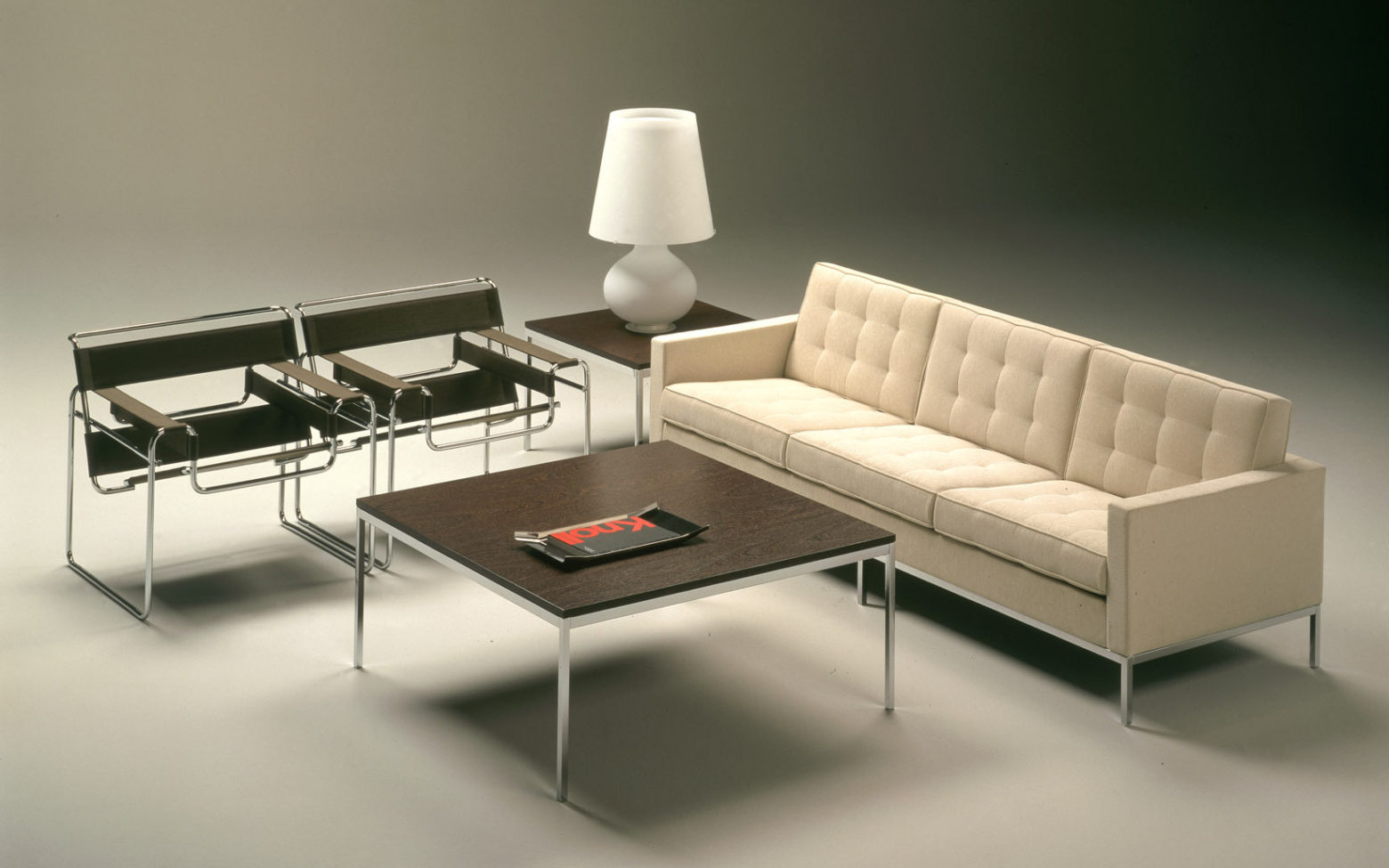
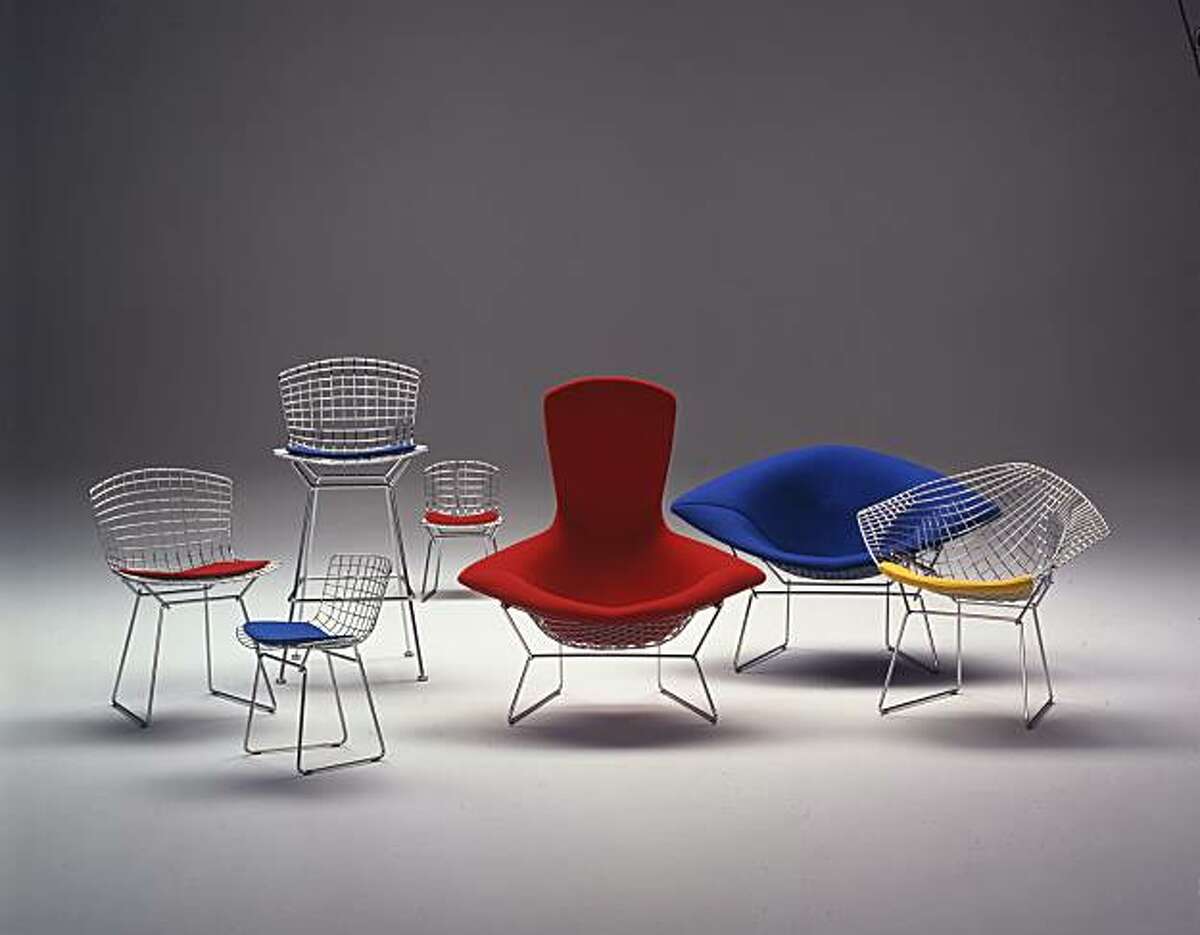
She was central in transforming Knoll from a small furniture business into a dominant international presence.
In 1961 she became the first woman to be awarded the American Institute of Architects ’ Gold Medal for Industrial Design. In 1962 she was recognized with the International Design Award from the American Institute of Interior Designers. In 2002 she was awarded the National Medal of Arts. She would retire from the business in the 1960 ’s, but lived until 2019, when she passed at the age of 101.
A pathbreaker in multiple dimensions, but one too frequently overshadowed both in her own time and now.
Rip