Detroit's Libraries, Part II: The Palace on Woodward
Good evening, everyone:
A second look at the Detroit Public Library system. Tonight, the Central Library on Woodward Avenue in Midtown.
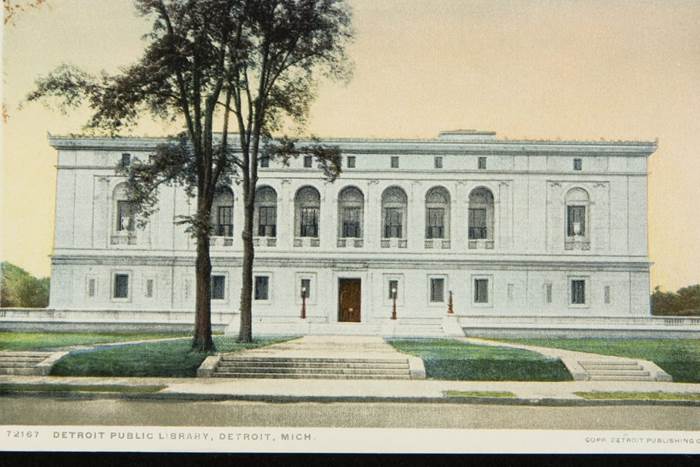
We left off in 1910, when Andrew Carnegie included Detroit among the 2,509 public libraries he financed. Designed by the great Cass Gilbert (who designed the United States Supreme Court Building, and – more significantly – the Minnesota State Capitol), the new building was located on Woodward Avenue opposite the Detroit Institute of Arts. Because of World War I, however, the building opened in 1921. It cost $3 million, or $40 million in today ’s dollars:
As Detroit grew (to its peak of some 2 million people in the 1950 ’s), the collection grew abreast – to more than 2.5 million items. The building had to be expanded, so the city turned again to the Gilbert family (no relation to ours), hiring Cass ’s son, Cass Gilbert, Jr.. The addition (more than 400,000 square feet) was completed in 1963. It added a new entrance, opening to a mosaic by Millard Sheets called “The River of Knowledge ”:

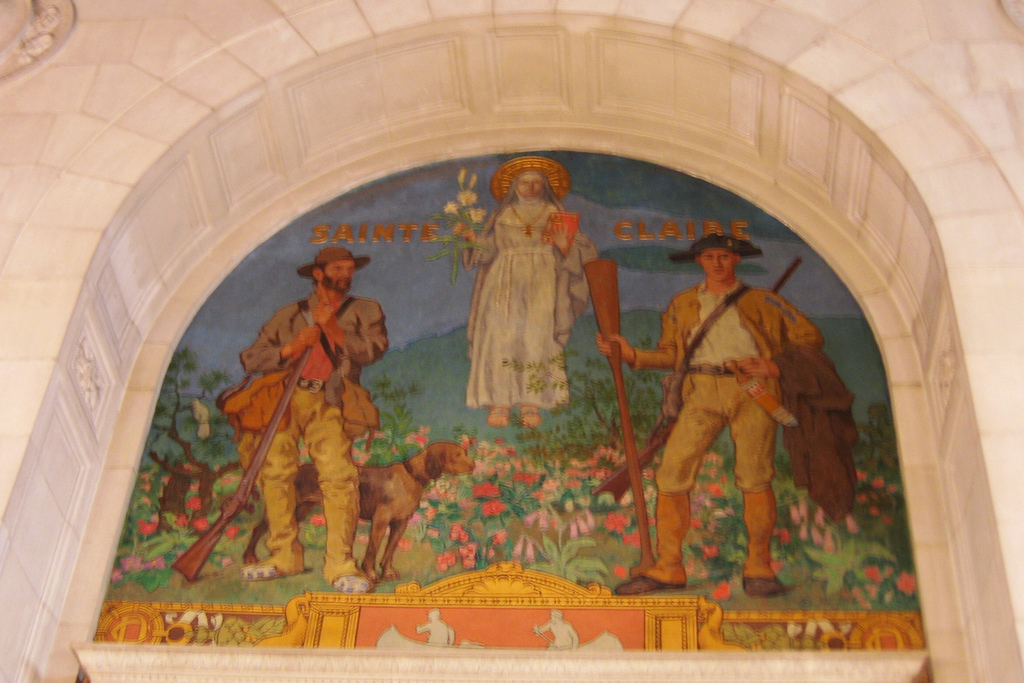
The library already possessed a mural “collection, ” begun in 1921 by three Gari Mechers murals depicting Detroit ’s early history:
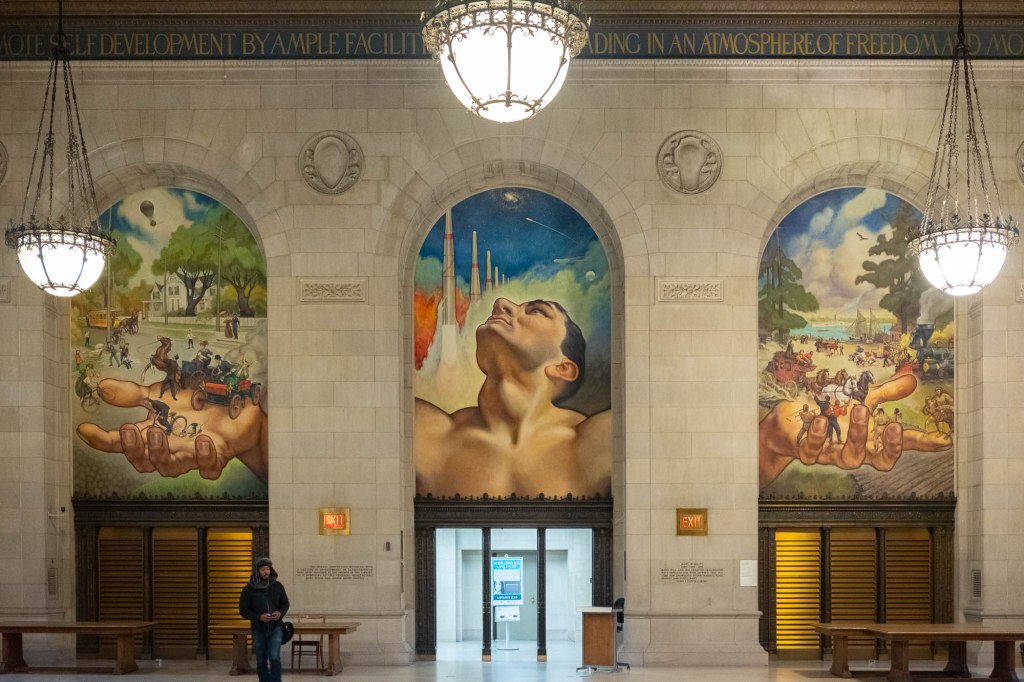
The addition contributed a triptych by Detroit artist John Stephens Coppin, focused on transportation:
The Central library is known not just for its Gilbert/mural grandeur, but also for its special collections.
Perhaps its best-known collection is the “Burton Historical Collection, ” which began as an historian ’s private library, but grew into an expansive, eclectic collection of books, maps, photos, church records, family genealogical records dating to the colonial era vast parts of North America.
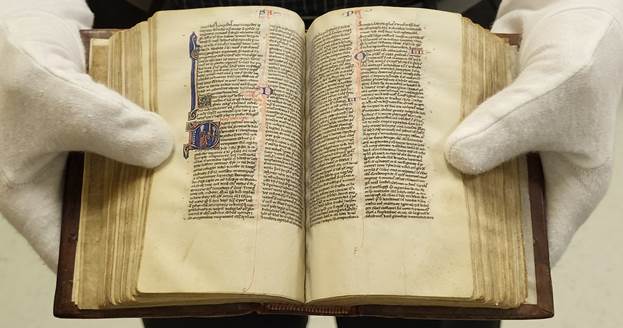
It also houses extensive collections of materials related to Black performing arts, artifacts about baseball history (the Ernie Harwell Collection, which focuses on the Tigers), and rare books (including illuminated manuscripts and a George Washington diary from 1789-90).
Next up: out to the neighborhoods.
Rip