Building Bridges, Advancing Justice: Darren Walker’s Enduring Legacy
Good evening, everyone:
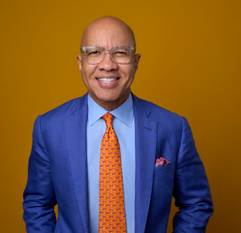
Tomorrow night at the Michigan Central Train Station, Detroit will have the chance to say goodbye, and thank-you, to Darren Walker, who is retiring as president of the Ford Foundation after some twelve years of service.
And we will have the opportunity to welcome Ford’s new president, Heather Gerkin, who comes to Ford after having served as the Dean of the Yale Law School.
![You cannot be an academic or a lawyer and not believe in free speech': Dean of Yale Law [Video]](https://cdn.prod.website-files.com/67eff083822ee4e28e46528c/690b6f878ed25a585ab21f5c_0db7dd58.png)
I’ve had the pleasure of working with Darren for some 20 years, first during his tenure as vice president of programs at the Rockefeller Foundation, and then while president of Ford. He hadn’t been at Ford for even a half-year, before being drawn into the Detroit bankruptcy of 2012-’13. His role in the resolution of the bankruptcy has been widely reported: Ford’s commitment to contribute $125 million to the Grand Bargain, his delegation of oversight of the legal strategy to: his vice president Ricardo Castro and the communications strategy to his vice president of communications Marta Tellado.
Darren remained a champion of Detroit. Even when the foundation sunsetted its metropolitan program, Ford kept its Detroit office, staffed by a steadfast Kevin Ryan. It contributed to Mayor Duggan’s affordable housing fund. Five years ago, Darren invited for the first time in forty years a Ford family member onto the Ford Board: Henry Ford III, the son of Edsel Ford II.
Beyond Darren’s commitment to Detroit, he became philanthropy’s leading voice for issues of racial equity, equality, and justice, urging philanthropy to act with moral integrity, clarity, and courage.
In his first book, A New Gospel of Wealth (2019), he reinterpreted Andrew Carnegie’s seminal The Gospel of Wealth to articulate a vision of philanthropy rooted not in charity, but in the affirmative restructuring of social systems that promote justice, honor diversity, and address the root causes of inequality.
In his most recent book (2025), The Idea of America: Reflections on Inequality, Democracy, and the Values We Share, Darren revisits many of those themes, but against the backdrop of the current political, social, and policy environment. In nearly 100 speeches, essays, and reflections, Darren writes about inequality, democracy, justice, and the purpose of philanthropy.
In an eloquent and moving final message to his colleagues entitle “Forever Forward,” Darren wrote in part:
As I reflect on my own tenure—where we started, where we are, where we’re going—two painful truths are inescapable: In the United States, we have arrived at a crossroads. And in our interdependent world, the cascading consequences matter for everyone; for many, they are a matter of life and death.
This is profoundly material for a global foundation, with colleagues, partners, and grantees managing the rolling, roiling repercussions every day and all around the world.
For my part, my love of America—my love of the American idea—is unwavering, unyielding, unfaltering.
Twelve years ago, I could not have imagined that, in my lifetime, this country—our country—would nurture strains of populism and illiberalism that seemed only to take root in other places. I thought them too anathema to our best traditions and aspirations—wholly inconsistent with our civic convictions and civic creed. In the America I know, red and blue, we believe in equal representation, equal rights, and equal opportunity—in tolerance, and generosity, and reason.
. . .
I have long observed that inequality fuels a vicious cycle that produces anxiety, resentment, and grievance. Through the decades, America’s mobility escalator has slowed and halted for many, entrenching a pernicious form of distrust and hopelessness among people of all communities. We, collectively, have lost grip of the shared identity that binds us together as Americans.
As a result of all this, we are turning against each other when we should be turning toward one another—when we should be finding common cause, and common ground, and a common good. Indeed, we have accepted, normalized, the opposite: a suffocating toxicity; contempt, hatred, malice, mendacity; a culture of outright nihilism.
. . .
At this defining crossroads, we can still choose courage over despair—moral leadership and active, engaged citizenship. This is our time to save and strengthen our pluralist democracy: to shake off the stupor and reject the indifference; to lean in, not hunker down; to organize and mobilize; to reach across the breach and to heal the breach, even and especially when we disagree; to build longer bridges rather than higher walls.
. . .
The work of building bridges—the work of pushing forward, onward, across them—this is who we are. If we are driven back one day, we regroup, we realign, and we try again the next—and again the next. Each one of us, in every generation, does our part to the best of our abilities, come what may.
Vintage Darren. He is unique in philanthropy. We will miss him more than we know – his voice, his vivacious presence, his courage, his moral clarity, his partnership.
He has our most profound appreciation, respect, and thanks.
Rip