Buffalo: Borrowing the Detroit Playbook, Carefully
Good evening, everyone:
Jennifer Kulcyzki. is ever on the lookout for reminders of the similarities between her two hometowns: Buffalo and Detroit. She recently found the ultimate reminder device: an article from a Buffalo media outlet, WGRZ Buffalo, that suggests that the new mayoral administration in Buffalo should take a page from the Detroit playbook by calling on philanthropy to help the city out of a tight financial predicament.

Entitled “Incoming Ryan administration uses 'Detroit model' with appeal to foundations to help on hiring, financial upgrades, programs,” the article quotes the Buffalo Deputy Mayor for Finance and Administration as saying, “The folks working on [the city’s budgeting situation] are looking at the best practices from the Detroit Model. "

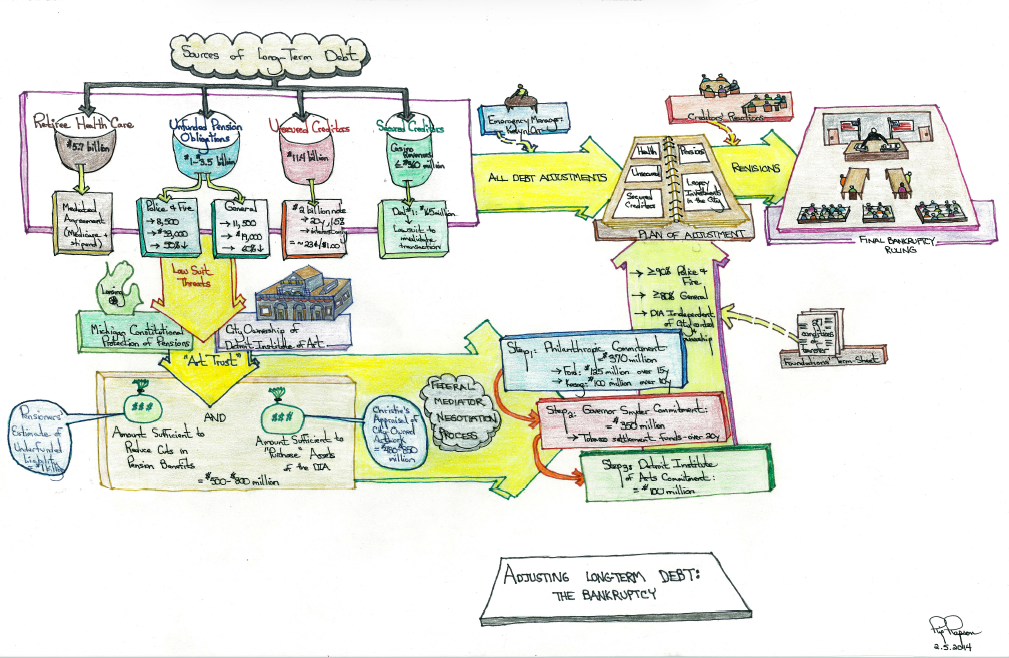
Before we in Detroit start to feel burgeoning pride about something like this, it’s important to note that Buffalo might be missing the point – at least in part. Detroit foundations, together with the State of Michigan and the Detroit Institute of Arts – catalyzed the $780 million fund required to forge the Grand Bargain, which in turn enabled the bankruptcy court’s mediator to restructure Detroit’s $18 billion of unfunded healthcare and pension obligations and unsecured bond obligations.
Buffalo, on the other hand, is trying to plug a $38 million budget shortfall . Pretty different challenges; whereas Detroit was looking at a long-term debt crisis, Buffalo is looking at a cash management/budget shortfall pinch.
That is not to say that the Buffalo philanthropic community shouldn’t find ways to help City Hall bridge to a balanced budget. But that is an ever-green problem, requiring municipal government to develop a structural correction to ensure revenues offset costs.
There are certainly ways that philanthropy can help balance the books. The article notes, for example, that “one [Detroit] foundation even bought one hundred new police cars for Detroit to help with public safety.” Well, not exactly. Roger Penske convinced several corporate and private foundations to contribute $8 million for the purchase of EMS vehicles and police cars. But the spirit is right.
Indeed, the Buffalo Deputy Mayor notes:
It's all a matter of scale and need. As we get digging into the government to get a better sense of what needs we have or things pop up, then we go with a written request and see how it plays out, so it could be a range of things, But, for right now, the focus is on staffing up the government. Bring in talent and also bring in consultants to look at certain areas and process flows.
Again, directionally a sound approach: prioritize ways the foundation community’s discretionary funds can best serve a public agenda. That is certainly the playbook Mayor Duggan used so successfully in Detroit. Indeed, Detroit philanthropy contributed materially to virtually every broad public priority of the last decade: housing rehabilitation, blight remediation, small business development, open space enhancement, arts and cultural activity, early childhood development, and on and on.
And Buffalo is blessed with an effective suite of foundations: the Ralph C. Wilson Foundation, the Buffalo Community Foundation, the Oishei Foundation, and others. So, the article is right to underscore that foundations in Buffalo do indeed – as they have in Detroit – have an important role to play in helping the city navigate its future stability, health, and vitality. Thanks for drawing the thread, Jennifer.
Rip